
How Ashwagandha Supports a Calmer, More Confident You
Ashwagandha is a time-tested adaptogenic herb studied for its role in supporting healthy cortisol levels already within a normal range. That balance has a downstream effect: a quieter nervous system, more stable mood, and a greater sense of ease in daily life and in intimate moments.
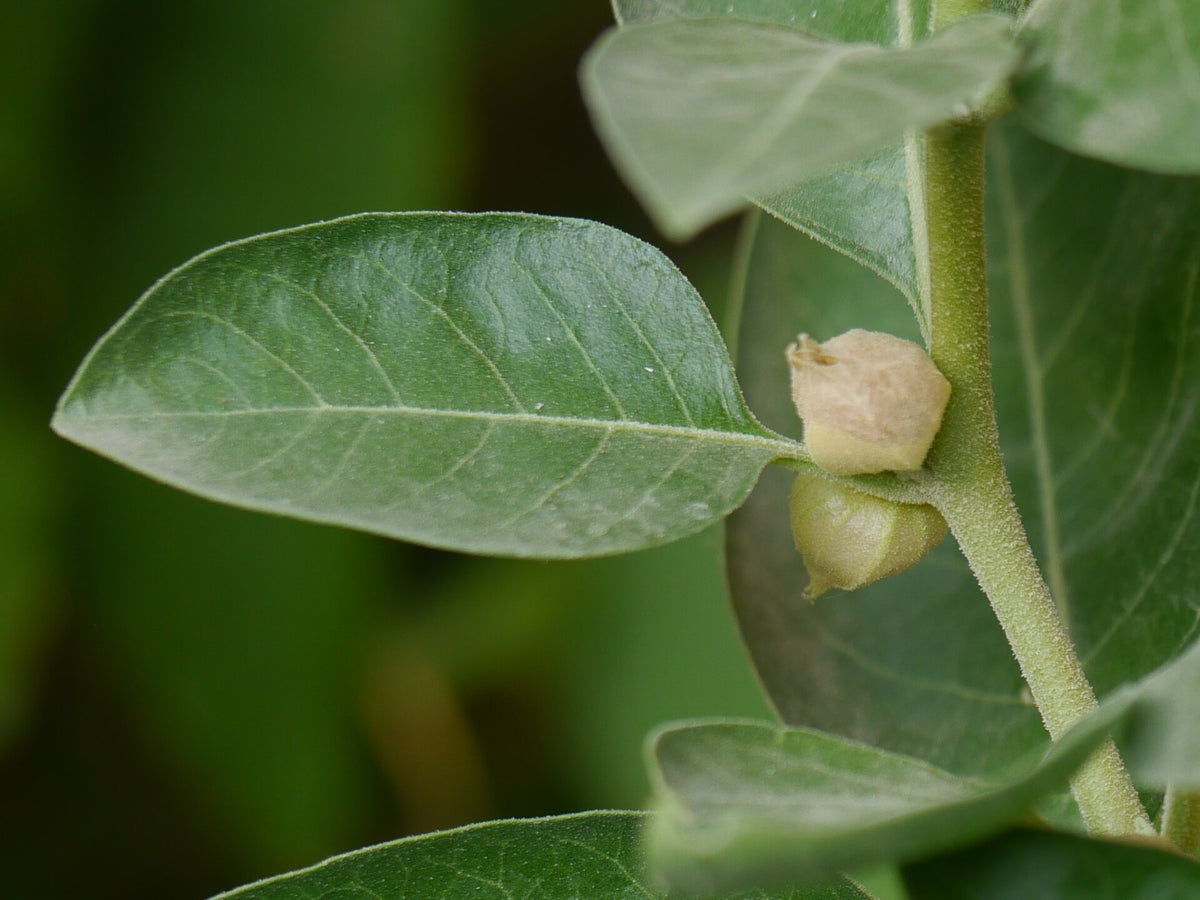
Dinesh Valke from Thane, India / CC BY-SA 2.0 / via Wikimedia Commons
What It Means to Be an Adaptogen
Ashwagandha (Withania somnifera) has been used in Ayurvedic practice for over 3,000 years. The plant's root is classified as an adaptogen, a category of botanicals recognized for helping the body maintain equilibrium under physical and mental stress.
The word "adaptogen" is not just marketing language. It describes a specific set of criteria: the substance must be non-toxic at normal doses, must produce a non-specific response to stressors, and must help normalize physiological functions. Ashwagandha meets all three.
What makes it particularly interesting for women is that stress does not land the same way in every body. Hormonal fluctuations across the menstrual cycle can amplify how intensely the nervous system registers a stressor. Research published in peer-reviewed journals suggests that ashwagandha supports the body's stress-response system by influencing the HPA (hypothalamic-pituitary-adrenal) axis, the central command for how much cortisol your body produces.
Cortisol is not just a "stress hormone." It is a master regulator, and its relationship with other hormones, mood-signaling chemicals, and intimate wellness is worth understanding properly.
Cortisol Is Doing More Than You Think
Most people have heard that cortisol rises during stress. Fewer know what sustained elevated cortisol actually does to the body over time.
In the short term, cortisol is useful. It sharpens focus, mobilizes energy, and prepares you to respond to a challenge. The body was designed for spikes, not a constant hum. Chronic stress keeps cortisol elevated in a way the system was never built to sustain.
Here is where ashwagandha research gets genuinely interesting. One double-blind, placebo-controlled randomized trial found that participants who took a standardized ashwagandha root extract reported significantly lower perceived stress scores, and their measured serum cortisol levels were lower than the placebo group. The improvements were meaningful, not marginal. That research is indexed on PubMed for anyone who wants to review the data directly.
Ashwagandha's active compounds, primarily withanolides, appear to work by modulating the HPA axis response. The result is cortisol that stays within a healthy, normal range rather than running persistently high.
The Mood Connection Most People Miss
Stress hormones and mood chemicals are not separate systems. They communicate constantly.
When cortisol stays elevated, it can interfere with serotonin signaling and suppress the dopamine reward pathway. This is part of why chronic stress tends to flatten mood. Things that used to feel good begin to feel neutral. Motivation drops. That low-level gray feeling is not a character flaw. It reflects what is happening neurochemically.
Ashwagandha's role in supporting cortisol balance therefore has a natural downstream effect on mood. By helping the body maintain healthy cortisol levels already within a normal range, the herb may allow serotonin and dopamine pathways to function the way they are meant to.
Customers often ask us whether botanical support for stress is a worthwhile starting point before exploring other options. The honest answer: for many women, addressing the foundational stress load is exactly the right move. Mood, energy, sleep quality, and even intimate confidence tend to shift once the nervous system stops running in a low-grade alarm state.
This is not a supports for anything. It is support for the body's own regulation.
What This Has to Do With Intimacy
Stress is one of the most reliable intimacy disruptors there is, and it rarely gets named directly.
The connection is partly hormonal. Elevated cortisol can suppress the production of estrogen and progesterone, the hormones most associated with desire and arousal in women. When the body is running a stress response, it deprioritizes intimacy. That is evolutionary logic, not a personal failing.
Research on the HPA axis and female sexual function points to cortisol as one of the most common, and most underappreciated, factors in decreased desire. It is not the only factor. But it is one of the most addressable.
Ashwagandha, by supporting a healthier cortisol profile, helps remove one significant layer of physiological interference. Think of it as clearing static from the signal. It is not a direct stimulant. It is a foundation layer.
There is also a psychological dimension. Confidence is a felt sense in the body. When cortisol is high, the nervous system is scanning for threats. It is hard to feel present, open, and relaxed when that alarm system is running in the background. Supporting the stress-response system supports the felt sense of safety that makes intimacy possible.
Ashwagandha Alongside Other Botanicals
No single ingredient does everything. Ashwagandha works upstream, in the cortisol and stress-regulation layer. Other botanicals address complementary spaces.
Saffron has been studied for its role in supporting serotonin signaling and mood stability. Mucuna pruriens is a natural source of L-dopa, a dopamine precursor tied to motivation, pleasure, and reward. Panax ginseng, a fellow adaptogen, has its own body of research around supporting energy and stamina. L-citrulline converts to nitric oxide in the body, which supports healthy blood flow to peripheral tissues.
These botanicals are not interchangeable. Each has a primary mechanism and a different part of the wellness picture it addresses most directly. The team at our shop formulates with this layered thinking in mind: the MINX CUBES blend draws on saffron, mucuna, Panax ginseng, L-citrulline, and beetroot to support the mood and blood-flow dimensions of intimate wellness.
Ashwagandha and Panax ginseng make natural companions in a daily wellness routine because both work at the adaptive, stress-and-energy level, though through different mechanisms. Using them in parallel is a logical pairing for women who want to address the stress layer and the vitality layer at the same time.
How to Build Consistency With Adaptogens
Adaptogens are not like caffeine. They do not produce a noticeable effect an hour after you take them. Their impact builds over time.
Most peer-reviewed research on ashwagandha has studied supplementation over eight to twelve weeks. The improvements in cortisol markers and self-reported stress scores tend to emerge gradually. This is worth knowing before you start, so you do not abandon the practice too early.
Consistency matters more than timing. The National Center for Complementary and Integrative Health notes that ashwagandha is generally considered safe for most healthy adults when used as directed. Women who are pregnant, breastfeeding, or managing thyroid conditions should check with a healthcare provider before starting any new botanical supplement.
Pairing adaptogen use with sleep-supportive habits tends to amplify the effect. Sleep quality and cortisol have a bidirectional relationship: poor sleep raises cortisol, and high cortisol disrupts sleep. Addressing both sides at once tends to produce faster progress than focusing on one in isolation.
A Grounded Approach to Intimate Confidence
Intimate confidence is not about performance. It is about being present. Relaxed. In your body rather than in your head.
The physiological foundation of that state is a nervous system that is not on high alert. Stress-hormone support, done consistently over weeks, helps build a lower baseline of physiological tension. That is not dramatic. But it is real.
Ashwagandha is one piece of that picture. Movement has its own well-documented effect on cortisol and mood-signaling pathways. Sleep shapes and responds to cortisol levels in a continuous feedback loop. And targeted botanical blends can support the mood and blood-flow dimensions of intimate wellness alongside the adaptive layer.
None of this works in a weekend. But if chronic stress has been quietly dimming what used to feel natural, addressing the stress layer is a logical, evidence-informed place to start. The body does not need to be fixed. It needs the conditions to do what it already knows how to do.
Frequently asked questions
What does ashwagandha actually do in the body?
Ashwagandha is classified as an adaptogen. Its active compounds, called withanolides, appear to work through the HPA axis, supporting the body's ability to keep cortisol levels already within a normal range. With consistent use over several weeks, the result is often a calmer baseline nervous system and more stable mood.
How long does it take to notice a difference with ashwagandha?
Most peer-reviewed studies have evaluated ashwagandha over eight to twelve weeks, which is when measurable changes in cortisol markers and self-reported stress scores tend to emerge. It is not a fast-acting supplement. Sixty to ninety days of consistent use gives your system enough time to respond meaningfully.
Is ashwagandha safe for women to take daily?
Research indicates ashwagandha is generally well-tolerated by most healthy adults when used as directed. Women who are pregnant, breastfeeding, or managing thyroid conditions should consult a healthcare provider before starting any new botanical supplement.
Can stress really affect intimate wellness?
Yes, and the mechanism is well understood. Elevated cortisol can suppress estrogen and progesterone production, hormones that play roles in desire and arousal. The body interprets a high-stress state as a poor environment for intimacy. Supporting healthy cortisol levels already within a normal range helps remove that layer of physiological interference.
What other botanicals complement ashwagandha for mood and intimate wellness?
Several botanicals work in related but distinct ways. Saffron supports serotonin signaling and mood. Mucuna pruriens provides L-dopa, a dopamine precursor. Panax ginseng is a fellow adaptogen with research around energy and stamina. L-citrulline converts to nitric oxide in the body, supporting healthy blood flow. Each addresses a different part of the same picture.
These statements have not been evaluated by the Food and Drug Administration. This product is not intended to diagnose, treat, cure, or prevent any disease.
Written by The Minx Editorial, Women's Wellness Editor.
Read more

Learn how maca root supports energy, mood, and libido in women. An in-depth look at the Peruvian adaptogen making its way into everyday wellness routines.

Zinc and magnesium support hormonal balance, sleep, and intimate wellness in distinct ways. See which mineral does what and how to get enough of both.