

How Fenugreek Supports Testosterone Balance in Men
Fenugreek contains steroidal saponins that may help support free testosterone levels already within a normal range. By influencing sex hormone binding globulin activity, these plant compounds promote a more favorable ratio of bioavailable testosterone, which plays a role in everyday energy, physical drive, and overall vitality.
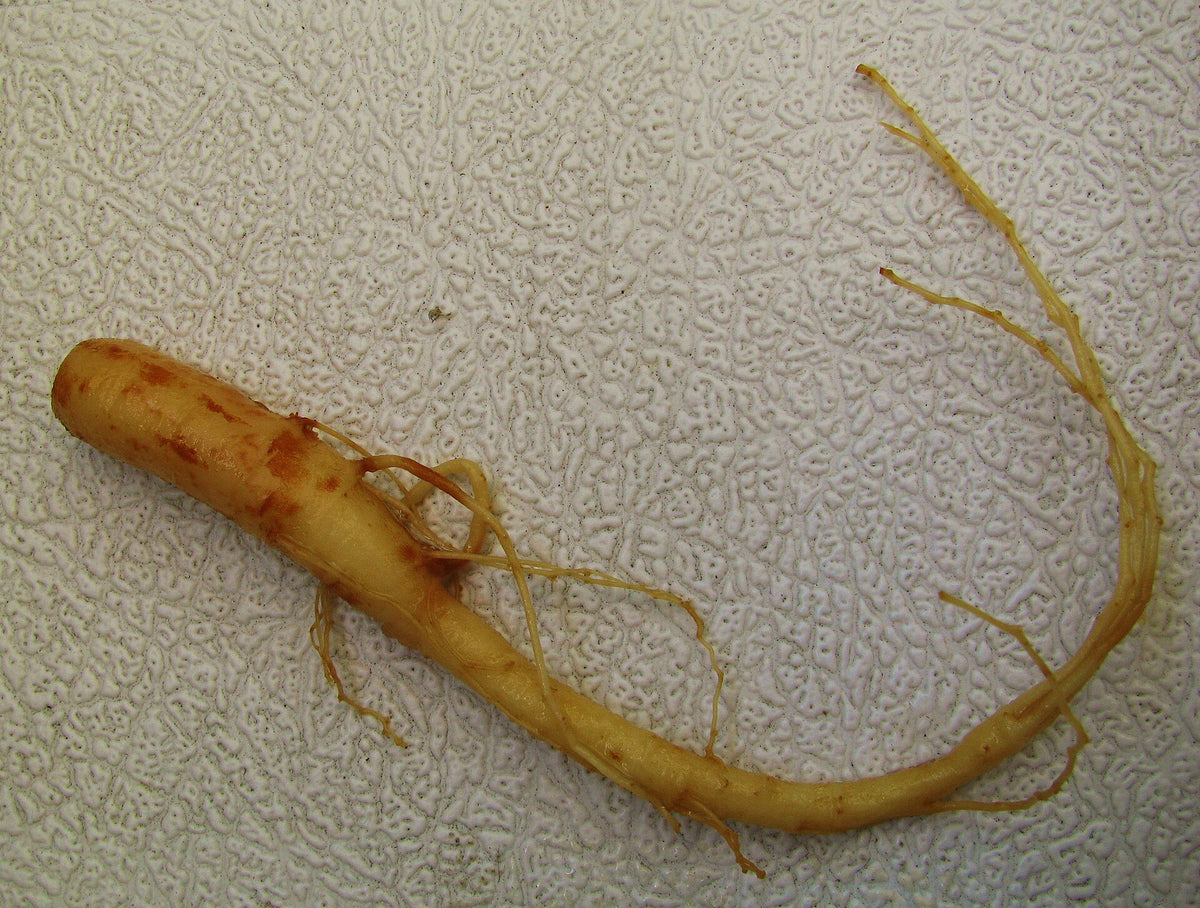
Thamizhpparithi Maari / CC BY-SA 4.0 / via Wikimedia Commons
What Fenugreek Actually Is
Fenugreek (Trigonella foenum-graecum) has been cultivated since antiquity. Ancient Egyptian papyri mention it. Ayurvedic practitioners documented its uses centuries ago, and cooks across India, North Africa, and the Middle East have reached for its amber seeds ever since. The flavor is slightly bitter, a little nutty, and unmistakable in a proper curry or spice blend.
What interests wellness researchers is not the flavor but the chemistry. Fenugreek seeds carry a concentrated supply of furostanolic saponins, a class of steroidal plant compounds that have attracted serious scientific attention for their potential to support hormonal balance in men.
Customers often ask us why an ancient cooking spice belongs in a modern men's wellness conversation. The short answer: the compounds that make fenugreek bitter are the same ones most studied for testosterone support.
Steroidal Saponins and the Testosterone Connection
Steroidal saponins appear in several plants, including tribulus and wild yam. Fenugreek seeds are particularly rich in a subset called furostanolic saponins, with protodioscin and diosgenin among the most studied. These molecules carry a steroid-like structural backbone, which is part of what drew researchers toward their hormonal interactions.
Here is the essential point: fenugreek does not supply testosterone. No plant does. What the saponins appear to do is interact with enzymes that govern how testosterone is metabolized and made available to tissues.
Two enzyme pathways have received the most attention. Aromatase converts testosterone into estrogen; when it is overactive, less testosterone remains available. 5-alpha reductase converts testosterone into dihydrotestosterone, and excess activity there can shift the hormonal picture unfavorably. Laboratory and human studies suggest that fenugreek saponins may help maintain a balanced activity of both enzymes, supporting testosterone levels already within a normal range.
Free Testosterone Versus Total Testosterone
Most people think of testosterone as a single number on a lab panel. The biology is more layered. The body produces a total amount, but a large portion binds to transport proteins before reaching tissues. The main carrier is sex hormone binding globulin, or SHBG. A smaller fraction binds loosely to albumin. Only the portion not bound to either protein, called free testosterone, is directly active in the body.
Free testosterone typically represents just one to three percent of total testosterone. That fraction is what most directly relates to energy, muscle maintenance, mood stability, and physical vitality.
SHBG levels tend to rise gradually as men age. As more testosterone binds to SHBG, less remains free. This is where fenugreek's saponins appear to do their most relevant work. Several controlled trials have observed meaningful increases in free testosterone among men using a standardized fenugreek extract, even when total testosterone held relatively steady. That pattern points to an effect on binding dynamics rather than raw production from the testes.
What Human Research Has Found
The evidence for fenugreek and testosterone is not anecdotal. A double-blind, randomized trial published in Phytotherapy Research followed healthy adult men who received a standardized fenugreek seed extract daily for six weeks. The supplement group showed significantly higher free testosterone levels at the end of the trial compared to the placebo group. Total testosterone was comparable between groups, consistent with an SHBG-mediated effect. The full abstract is available at PubMed (PMID 21312304).
A second eight-week trial, published in the Journal of the International Society of Sports Nutrition, enrolled resistance-trained men and found that those taking a fenugreek extract maintained free testosterone levels already within a normal range more consistently than the placebo group. Favorable changes in body composition were also recorded. That study is indexed at PubMed (PMID 20857513).
Taken together, these trials describe fenugreek as a meaningful contributor to hormonal wellness, not a marketing footnote. The mechanism is biologically plausible, the human data replicates across independent studies, and the safety profile has been consistently clean across trial populations.
How Fenugreek Fits a Broader Wellness Formula
Fenugreek addresses one specific part of the testosterone picture: bioavailability through SHBG modulation. That focused mechanism makes it a strong candidate for formulas that pair it with ingredients addressing other parts of the hormonal ecosystem.
Zinc is a cofactor for several enzymes involved in testosterone synthesis. Deficiency is common in men who sweat heavily or eat limited animal protein. Vitamin D, which functions more like a steroid hormone than a traditional vitamin, has its own documented relationship with healthy testicular function. Ashwagandha supports healthy cortisol levels already within a normal range, which matters because cortisol and testosterone share certain biosynthetic precursors during periods of ongoing stress.
None of these ingredients duplicate fenugreek's role. They complement it. The Minx Man Cubes formula brings together botanicals and nutrients chosen with this layered thinking, combining fenugreek with compounds that support the hormonal picture from multiple directions at once.
Lifestyle Factors That Work Alongside Fenugreek
Supplements work best as additions to a solid foundation. Sleep is probably the single most powerful daily lever for men's hormonal health. A study published in JAMA found that young men sleeping only five hours a night showed testosterone levels roughly ten to fifteen percent lower than during eight-hour sleep periods. That daily swing is larger than most single supplements produce.
Resistance training promotes healthy testosterone already within a normal range, particularly compound movements that recruit large muscle groups. High-volume endurance training without adequate recovery can temporarily suppress levels. Body composition matters too. Visceral adipose tissue expresses aromatase, the same enzyme fenugreek saponins may help moderate. A lean, active physique supports a more favorable hormonal environment.
Stress management is underrated here. Cortisol draws from many of the same precursors as testosterone. Chronic stress nudges that allocation toward cortisol at testosterone's expense. Regular recovery practices, whether breathwork, consistent downtime, or time outdoors, help the body prioritize hormonal balance over the stress response.
A Practical Note on Quality and Standardization
Not all fenugreek supplements are equivalent. Three factors matter most when evaluating a product:
- Standardization. Human trials have used extracts standardized to 40 to 50 percent furostanolic saponins. Whole seeds and generic powders contain these compounds at much lower concentrations, which meaningfully changes the expected effect.
- Dose. The controlled research generally used 500 to 600 mg per day of standardized extract. Doses well below this range are unlikely to replicate what the studies observed.
- Complementary ingredients. A thoughtfully designed formula layers fenugreek with nutrients that address different parts of the hormonal picture rather than relying on a single mechanism.
These are the standards worth applying to any fenugreek-containing product. Quality of raw material and standardization rigor matter far more than marketing language. That principle guides every formula we put our name on.
Frequently asked questions
What are furostanolic saponins and why do they matter for testosterone?
Furostanolic saponins are steroidal plant compounds found in high concentrations in fenugreek seeds. They are thought to help support free testosterone levels already within a normal range by modulating sex hormone binding globulin activity and influencing key enzymes involved in testosterone metabolism, including aromatase and 5-alpha reductase.
How long does it take for fenugreek to support healthy testosterone levels?
Based on available human trials, meaningful support for free testosterone levels already within a normal range was observed at six to eight weeks of consistent daily use of a standardized extract. Individual results vary depending on baseline hormonal status, lifestyle habits, and the quality of the formula used.
What is SHBG and why does it affect how testosterone works in the body?
SHBG stands for sex hormone binding globulin, a protein produced primarily in the liver. When testosterone binds to SHBG, it becomes inactive and unavailable to tissues. Only free, unbound testosterone is directly functional. Supporting healthy SHBG levels already within a normal range promotes a better ratio of biologically active testosterone.
Does eating fenugreek seeds in food provide the same support as a supplement?
Whole fenugreek seeds contain furostanolic saponins, but at much lower concentrations than standardized extracts. The amounts typically consumed through cooking are unlikely to deliver the doses observed in research studies. Standardized extracts are designed to provide a consistent and meaningful supply of the active compounds.
Can fenugreek be combined with other men's wellness ingredients?
Fenugreek has been studied both alone and as part of combination formulas without notable safety concerns across clinical populations. It pairs well with complementary nutrients like zinc, vitamin D, and adaptogens that each address different aspects of hormonal wellness. As with any supplement, checking with a healthcare provider before starting is a sensible step.
These statements have not been evaluated by the Food and Drug Administration. This product is not intended to diagnose, treat, cure, or prevent any disease.
Written by The Minx Editorial, Women's Wellness Editor.
Read more
Panax ginseng supports men's energy and endurance through ginsenoside activity. Discover how this adaptogen differs from caffeine and explore Minx wellness.

Learn how maca root supports energy, mood, and libido in women. An in-depth look at the Peruvian adaptogen making its way into everyday wellness routines.