
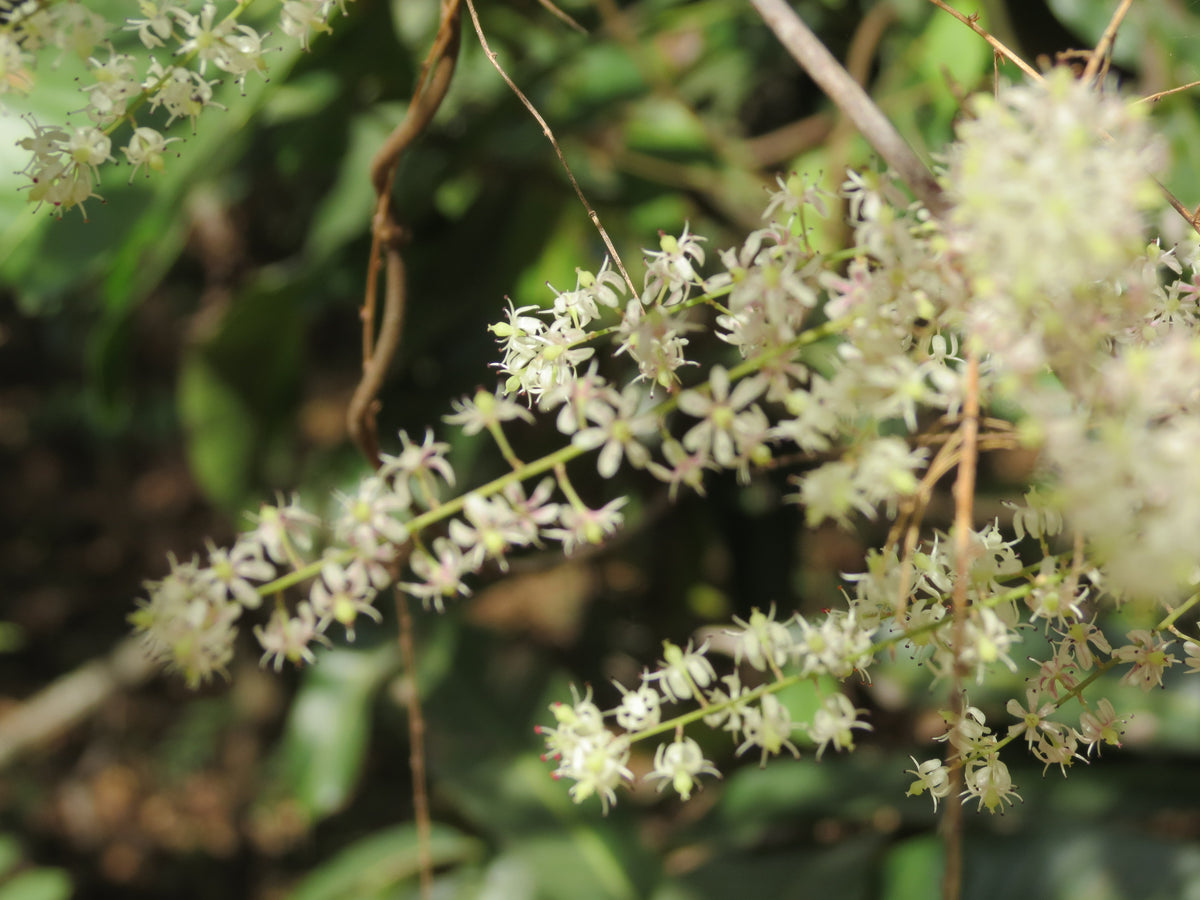
Shatavari vs Maca: Two Herbs, Two Traditions
Shatavari is an Ayurvedic adaptogen rich in steroidal saponins that supports hormonal balance already within a normal range. Maca is an Andean root that supports energy and libido through a hormone-independent pathway. The two herbs work differently enough that many women find them complementary rather than redundant.
Two Plants, Two Worlds Apart
One grows in the rocky soils of the Indian subcontinent. The other thrives at 14,000 feet in the Peruvian Andes, where temperatures drop below freezing at night and the air is thin enough to make most crops impossible. Shatavari (Asparagus racemosus) and maca (Lepidium meyenii) share almost nothing geographically or botanically. What they share is a long, well-documented history of use by women seeking to support vitality and wellbeing.
Both herbs have been studied by modern researchers. Neither is a quick fix. Understanding how they differ is the first step toward knowing which one belongs in your routine, and whether both do.
Shatavari: The Ayurvedic Feminine Tonic
The name shatavari translates roughly from Sanskrit as "she who possesses a hundred husbands," a nod to its traditional role in women's reproductive wellness. In Ayurvedic medicine, it is classified as a rasayana, a category of herbs thought to promote longevity and rejuvenation. It has been used for thousands of years, long before anyone had heard of the word adaptogen.
The active compounds that interest researchers today are steroidal saponins called shatavarins. These have a mild phytoestrogenic character, meaning they interact with estrogen receptors in ways that may help the body maintain hormonal balance already within a normal range. This is not the same as introducing synthetic estrogen. The effect is more like a gentle signal than a push.
Research indexed on PubMed covers shatavari across several markers of reproductive and hormonal health, with consistent interest from Ayurvedic pharmacology researchers over the past two decades. The herb is also rich in antioxidant compounds and mucilaginous saponins that support digestive comfort, part of why Ayurvedic practitioners recommend it for general nourishment alongside its more targeted uses.
Traditional forms include a cooked milk preparation called shatavari kalpa. Modern extracts are typically standardized to at least 60% saponin content, which delivers a far more concentrated dose than traditional food preparations.
Maca: The Root That Thrives Where Nothing Else Will
Maca is a brassica, related to broccoli and cabbage, though it looks nothing like either. The edible part is a small, dense root that grows underground in one of the harshest agricultural environments on Earth. Indigenous Andean communities have cultivated it for at least 2,000 years, using it to support stamina and reproductive vitality in both men and women.
What makes maca unusual is what it does not do. Unlike shatavari, maca is not phytoestrogenic. It does not bind to estrogen receptors or mimic hormones. Its primary active compounds are glucosinolates and a family of fatty acid amides called macamides, which appear to work through the central nervous system and the hypothalamic-pituitary-adrenal axis.
Several trials collected on PubMed have explored maca's effects on libido and mood in postmenopausal women, with results suggesting it supports both without measurably changing estrogen or progesterone levels. That is a key distinction from phytoestrogenic herbs, and it shapes who benefits most.
Color variety matters here. Yellow maca is the most widely used and is associated with general energy support. Red maca has been studied in relation to bone density markers already within a normal range. Black maca is traditionally linked with stamina and cognitive clarity. Many formulas use a gelatinized tri-color blend, which is gentler on digestion than raw maca powder.
Different Pathways, Different Effects
Placing these two herbs side by side, the contrast becomes clear.
Shatavari works largely through a phytoestrogenic mechanism. The shatavarins interact with estrogen receptors, which is why shatavari is most often recommended when estrogen levels are shifting or when the body needs support for hormonal comfort and cycle regularity already within a normal range. It operates within the endocrine system.
Maca works outside that system entirely. Its glucosinolates and macamides appear to influence neurotransmitter signaling and the stress-hormone axis. This is why maca is associated with energy and mood support in ways that are essentially independent of estrogen levels. It also explains why maca tends to benefit both men and women in overlapping ways, while shatavari is more specifically rooted in feminine wellness traditions.
One practical note: because shatavari has mild phytoestrogenic activity, women with estrogen-sensitive conditions should speak with a healthcare provider before adding it to their routine. Maca carries no such flag, though it contains glucosinolates, and those with thyroid concerns sometimes choose to moderate intake of brassica-family foods in raw form. Gelatinized maca significantly reduces that consideration.
Who Tends to Reach for Which
Customers often ask us: "Do I need shatavari, maca, or both?" The honest answer depends on what you are looking to support.
Shatavari tends to resonate most with women who are:
- Navigating the hormonal shifts of perimenopause or postmenopause
- Seeking support for cycle comfort and regularity already within a normal range
- Drawn to Ayurvedic traditions and adaptogens that work through the endocrine system
- Focused on overall nourishment alongside more targeted feminine support
Maca tends to resonate with women who are:
- Seeking energy and stamina support not tied to hormonal pathways
- Interested in libido and mood support that works independently of estrogen
- In earlier reproductive years, where phytoestrogenic herbs may be unnecessary
- Looking for something with a research record in mixed-sex populations
Neither profile is universal. Some 28-year-olds swear by shatavari. Some perimenopausal women prefer maca as a starting point. These are orientations, not rules.
Why the Two Herbs Complement Each Other
Because shatavari and maca work through different mechanisms, they do not cancel each other out. They address adjacent systems without overlap. Shatavari brings phytoestrogenic support and adaptogenic nourishment from the Ayurvedic tradition. Maca brings energy, macamide activity, and libido support through a hormone-independent route from the Andean tradition. Together, they cover more ground than either does alone.
This is the logic behind our formula. If you want to try the right combination of shatavari and maca without sourcing and dosing each herb separately, Minx Cubes was built around that pairing.
Combining herbs is not new. Ayurvedic formulations have always used multiple ingredients together, on the principle that complementary herbs offer more than any single one can. The Andean tradition similarly combined maca with other plant foods. What is relatively new is the Western practice of isolating one herb at a time. The pairing approach may actually be closer to how these traditions intended them to be used.
How to Read a Label for Either Herb
Herb quality varies enormously. A few things worth knowing before you buy.
For shatavari, look for extracts standardized to at least 60% saponins. Whole-root powder is more affordable but delivers much lower active-compound concentrations per gram. Root maturity matters: the plant should be harvested at three to four years for optimal saponin development.
For maca, gelatinized maca is easier to digest than raw powder for most people. Look for products that specify root, not leaf or stem. Peruvian origin matters here; the altitude and specific soil mineral profile of the Andes affect glucosinolate content in ways that are difficult to replicate elsewhere.
For any combined formula, look at the actual extract ratios rather than the front-of-label milligram count. 500 mg of a 5:1 extract is not the same as 500 mg of raw powder. They are telling very different stories. Transparency about standardization is the clearest sign that a brand takes sourcing seriously.
Two herbs. Two traditions. One question worth answering: which one is right for where you are now.
Frequently asked questions
Is shatavari safe to take every day?
Shatavari is generally considered well-tolerated for daily use in amounts consistent with traditional practice and current research. Because it has mild phytoestrogenic activity, women with estrogen-sensitive conditions should consult a healthcare provider before starting. Most healthy adults use it consistently over weeks to months without issue.
What is the difference between yellow, red, and black maca?
Yellow maca is the most common and is associated with general energy and stamina support. Red maca has been studied in relation to bone density markers already within a normal range. Black maca is traditionally associated with cognitive clarity and physical stamina. Many formulas blend all three to capture the full range of glucosinolate and macamide profiles each color brings.
Can I take shatavari and maca at the same time?
Yes, the two herbs work through different mechanisms: shatavari via phytoestrogenic pathways, maca via a hormone-independent route. They are commonly paired precisely because they support complementary aspects of women's wellness without duplicating each other's mechanism. Minx Cubes combines both in a single formula.
How long does it take to notice a difference from shatavari or maca?
Both herbs are tonic herbs meant for consistent, long-term use rather than single-dose effects. Most people who notice a shift report it after two to four weeks of daily use. Neither shatavari nor maca is designed to work acutely; they work best as part of a regular routine over time.
Is maca a stimulant like caffeine?
No. Maca contains no caffeine or known stimulant compounds. The energy support associated with maca appears to come from its macamide content and its effects on the stress-hormone axis rather than from central nervous system stimulation. It does not cause the jitteriness or sleep disruption associated with caffeine-based supplements.
These statements have not been evaluated by the Food and Drug Administration. This product is not intended to diagnose, treat, cure, or prevent any disease.
Written by The Minx Editorial, Women's Wellness Editor.
Read more
Magnesium supports neurotransmitter balance, muscle relaxation, and the mood-intimacy link. Learn why many women fall short and how to support healthy levels.
Notice dull hair, slow recovery, or afternoon energy dips? These signs may point to suboptimal zinc. Learn what to look for and how to support your levels.