
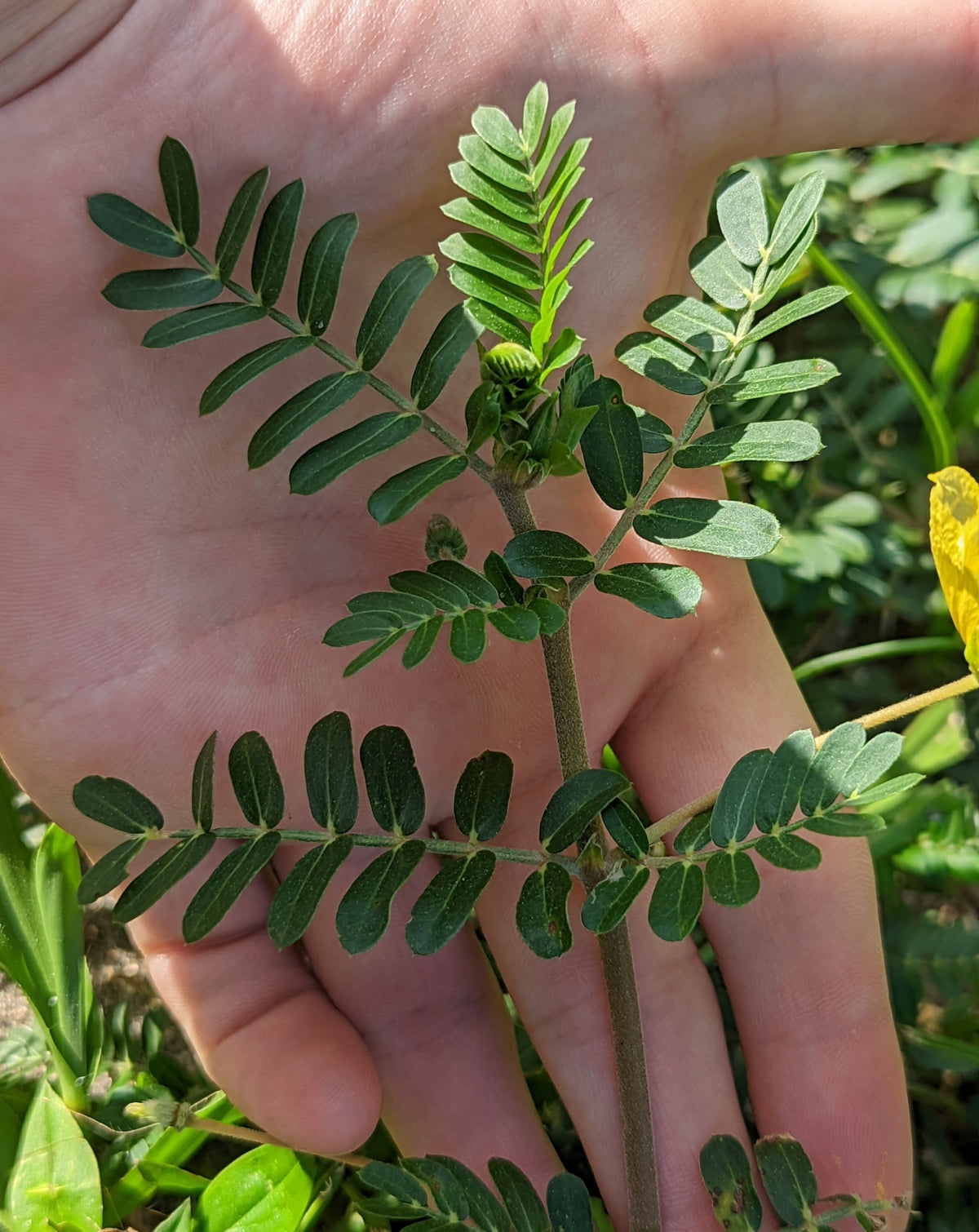
Tribulus Terrestris: The Plant Behind the Buzz
Tribulus terrestris is a flowering plant with over 3,000 years of use in Ayurvedic and traditional Chinese medicine. Its steroidal saponins, particularly protodioscin, are studied for their role in supporting healthy testosterone levels already within a normal range, making it a popular botanical for women's vitality and wellness.
What Is Tribulus Terrestris?
Tribulus terrestris is a small, sprawling plant found across Southern Europe, Asia, Africa, and Australia. The name comes from Latin, referencing the spiny seed pods that have been tormenting bare feet for millennia. Botanically, it belongs to the Zygophyllaceae family. Unremarkable to look at. Significant to study.
The part most relevant to supplement research is the fruit extract, which is dense with steroidal saponins. These are naturally occurring plant compounds that share a structural resemblance to human steroid hormones. The primary saponin researchers focus on is protodioscin. Most credible tribulus extracts are standardized to their saponin content, typically ranging from 40% to 90%, because raw tribulus powder varies wildly in potency from batch to batch.
Understanding this distinction matters before we go further. Not all tribulus supplements are equivalent. The form, the standardization, the plant part used, the dose: each of these shapes whether a product can actually reflect what clinical research has studied.
Deep Roots in Ayurvedic Tradition
In Ayurveda, tribulus terrestris is known as Gokshura, which translates roughly to "cow's hoof," a reference to the shape of its fruit. It has been a key herb in classical Indian medicine for well over 2,000 years. Ancient texts like the Charaka Samhita classify it as a rasayana herb, meaning a substance that promotes rejuvenation and overall strength.
Traditional Chinese medicine adopted tribulus as well, calling it ci ji li. Both traditions used it to support vitality, reproductive wellness, and urinary health. That kind of cross-cultural convergence is not a coincidence. Empirical medicine, practiced over centuries across different populations, tends to retain what actually seems to do something.
One thing worth noting: Ayurvedic practitioners rarely prescribed Gokshura alone. It was formulated alongside other adaptogens, tonics, and botanicals. The reasoning was synergy. Plants often behave differently in combination than in isolation. That traditional wisdom still informs how thoughtful formulators approach botanical blends today.
The Active Compounds That Drive the Research
Tribulus terrestris owes most of its studied effects to steroidal saponins, specifically protodioscin and dioscin. These compounds structurally resemble human steroid hormones, which is why researchers became interested in their potential to support hormonal balance in the first place.
Protodioscin is believed to serve as a precursor to DHEA (dehydroepiandrosterone), a naturally produced hormone made in the adrenal glands. DHEA is itself a building block for both estrogen and testosterone in the body. This creates a plausible biological pathway. The plant provides raw material that the body's own systems may use.
Dioscin, the secondary saponin, has been studied for its potential interaction with luteinizing hormone (LH) pathways. LH signals the gonads to produce sex hormones. Some research suggests tribulus may help support LH activity already within a normal range. One peer-reviewed clinical study focused specifically on premenopausal women, where hormonal effects were most visible.
The concentration of these saponins depends heavily on which part of the plant is used. Fruit extract contains significantly higher protodioscin levels than extracts made from stems or leaves. This single variable explains much of the inconsistency across tribulus studies conducted before standardization became the norm.
Tribulus and Testosterone in Women
Customers often ask us about this directly: does tribulus affect testosterone in women, and should women care?
Yes to both. Testosterone exists in women. It is produced in small amounts by the ovaries and adrenal glands and plays a meaningful role in energy, muscle tone, mood, and sexual desire. Many women are not aware of this until their mid-30s, when levels begin a gradual natural decline that continues into perimenopause and beyond.
Tribulus terrestris has been studied specifically in women for its role in supporting healthy testosterone levels already within a normal range. A randomized, double-blind, placebo-controlled trial examined premenopausal women and found that tribulus supplementation at 7.5 mg per kilogram of body weight per day was associated with meaningful improvements in sexual desire and satisfaction. The researchers attributed these outcomes to the herb's support for hormonal balance, not pharmacological hormone delivery.
That distinction is worth repeating. Tribulus does not flood the body with testosterone. The evidence points toward support for the body's own hormonal regulation. Women in this research were not athletes trying to build muscle. They were adults navigating a natural phase of life. That is a very different context than how tribulus was originally marketed in the late 1990s fitness industry.
What the Science Currently Shows
Tribulus research is promising, but still maturing. Most human trials have used relatively small sample sizes, short study durations, and varying extract concentrations. The athletic performance claims that launched tribulus into mainstream supplement culture in the 1990s did not hold up well in follow-up research on healthy young men with normal hormone levels. Those trials often used unstandardized extracts or whole herb powder, which explains much of the inconsistency.
Where the evidence looks more consistent is in populations with suboptimal baseline levels: women in perimenopause, adults experiencing fatigue, individuals managing chronic stress. The effects are more visible when there is something to restore than when everything is already optimal. This is a pattern seen across many well-studied adaptogens.
Dosage specifics matter here. Studies showing positive hormonal outcomes in women used daily doses between 250 mg and 750 mg of standardized extract, taken consistently over at least four weeks. Short-term or irregular use is unlikely to replicate those results.
Peer-reviewed research on tribulus has consistently identified saponin standardization and accurate dosing as the variables most predictive of positive outcomes. Short-term use in healthy adults appears safe, with no significant adverse effects reported across the studies examined.
What to Look for in a Tribulus Supplement
The supplement industry has a tribulus problem. Because the herb is inexpensive, unstandardized powders get packaged as though they are equivalent to the concentrated extracts used in research. A few things to check before buying:
- Saponin standardization: Look for 40% saponins or higher, listed explicitly on the label. "Tribulus extract" with no percentage listed is a signal to keep shopping.
- Fruit over aerial parts: Fruit extract contains meaningfully higher protodioscin concentrations than extracts from leaves, stems, or whole herb powder. The label should specify fruit.
- Disclosed dose: Human studies used between 250 mg and 750 mg of standardized extract daily. Proprietary blends that hide individual ingredient amounts make it impossible to assess whether a product delivers a meaningful serving.
- Third-party testing: Independent lab verification of potency and purity matters for a botanical this widely adulterated in the bulk ingredient market.
- Form and daily compliance: The best supplement is the one a person actually takes every day. A palatable format matters far more than most buyers realize real-world outcomes over weeks and months.
How Tribulus Fits Into a Daily Ritual
In our formula, we chose tribulus terrestris fruit extract standardized to a meaningful saponin concentration because the research points consistently toward fruit-derived extracts as the most potent option. The goal was to build something that respects both the traditional use of this plant and the modern evidence for how it works.
Tribulus pairs well with other botanicals that support hormonal harmony. Adaptogens like ashwagandha and maca may help support the body's stress response, which can influence the natural balance of estrogen and testosterone in women. A well-formulated blend that addresses multiple pathways tends to outperform single-ingredient products in real-world wellness contexts.
Consistency matters most. Tribulus is not an acute compound with effects you will feel in the first hour. Most research on positive outcomes involved daily supplementation over four to twelve weeks. Think of it the way you would think about any wellness habit: the value builds over time, not in a single dose.
If you are ready to add a well-sourced tribulus supplement to your routine, try the women's libido gummies with tribulus in MINX CUBES, formulated with exactly that daily consistency in mind.
Frequently asked questions
What does tribulus terrestris actually do for women?
Tribulus terrestris supports healthy testosterone levels already within a normal range, which plays a role in energy, mood, and sexual desire in women. Its steroidal saponins, particularly protodioscin, may support the body's natural hormonal regulation through luteinizing hormone activity.
How long does tribulus take to work?
Most human studies showing positive outcomes used daily supplementation over four to twelve weeks. Tribulus is a botanical tonic, not a fast-acting stimulant. Results reflect consistent daily use over time rather than a single dose.
How much tribulus should I take each day?
Human research has used doses ranging from 250 mg to 750 mg of standardized tribulus fruit extract per day. The right amount depends on the extract's saponin concentration and your body weight. Follow the specific dosage guidance on your product label.
Is tribulus terrestris safe for daily use?
Reviews of available research have found short-term use of tribulus in healthy adults to be safe, with no significant adverse effects reported. As with any supplement, people who are pregnant, nursing, or taking prescription medications should consult a healthcare provider before starting.
What is the difference between tribulus fruit extract and whole herb powder?
Fruit extract contains significantly higher concentrations of protodioscin, the primary active saponin in tribulus. Whole herb powder includes stems and leaves, which are much lower in saponin content. Most research showing positive hormonal support effects used standardized fruit extract specifically, not whole herb.
These statements have not been evaluated by the Food and Drug Administration. This product is not intended to diagnose, treat, cure, or prevent any disease.
Written by The Minx Editorial, Women's Wellness Editor.
Read more
Men's intimate wellness covers more than performance. Learn how tribulus, L-arginine, and zinc support male vitality, and explore our Man Cubes formula.
REM cycles and cortisol rhythms directly shape intimate energy in women. Learn the science behind the connection and what helps maintain it night after night.