
How Ashwagandha Supports Your Stress Response
Ashwagandha is an adaptogenic root used for thousands of years to support the body's stress response. It works through the HPA axis, helping maintain cortisol levels already within a normal range. Over 8 to 12 weeks of consistent use, this support may promote better energy, mood balance, and healthy libido.
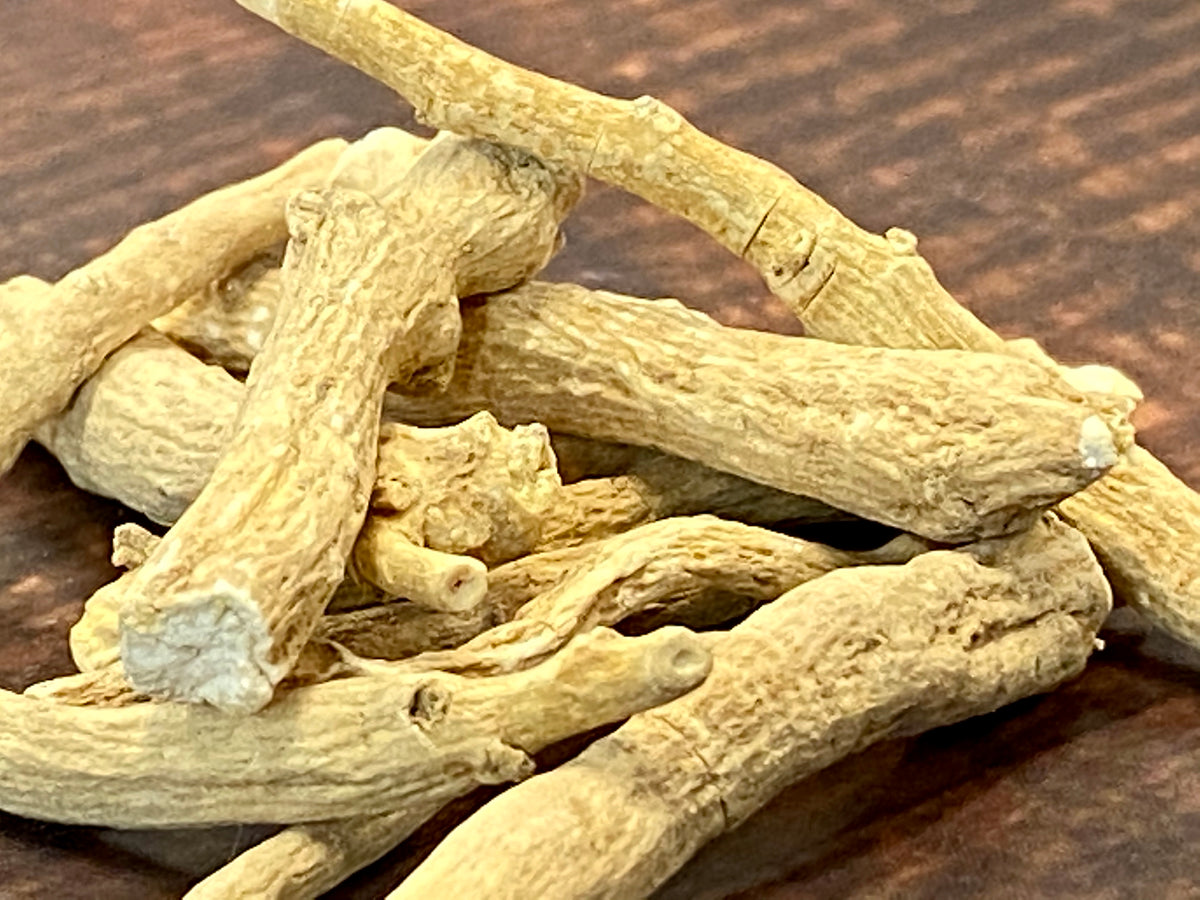
"Ashwagandha Root" by Formulatehealth.com is licensed under CC BY 2.0. To view a copy of this license, visit https://creativecommons.org/licenses/by/2.0/.
What Ashwagandha Is and Where It Comes From
Ashwagandha (Withania somnifera) is a small woody shrub native to India, North Africa, and parts of the Mediterranean. Its root has been used in Ayurvedic practice for roughly 3,000 years. Not as a trend. As a foundation.
The plant belongs to a category of herbs called adaptogens -- botanicals that help the body maintain internal balance during periods of elevated physical or mental demand. They do not force a single outcome. They support the systems that regulate balance in the first place.
The active compounds in ashwagandha are called withanolides. Most quality extracts are standardized to between 2.5% and 5% withanolides. That percentage matters far more than the raw milligram number on the label. A 600 mg capsule of undifferentiated root powder is a very different product from 300 mg of a concentrated extract standardized to 5%. Same plant. Meaningfully different result.
The name itself translates loosely from Sanskrit as "smell of horse" -- not glamorous, but the root's enduring reputation across centuries and cultures says more than any marketing copy could.
The Cortisol Connection
Cortisol is your body's primary stress hormone. It rises in the morning to pull you out of sleep, spikes during a hard deadline or a difficult conversation, then ideally tapers off by evening. That rhythm, when functioning well, is healthy and completely normal.
The problem is what happens when that rhythm breaks down. Sustained elevated cortisol can affect sleep architecture, energy levels, and the balance of other hormones involved in mood and libido. Your body, in its wisdom, prioritizes stress chemistry over reproductive chemistry. Biologically that makes sense. It does not make for a fulfilling, energized life.
Ashwagandha has been studied for its role in supporting the HPA axis -- the hypothalamic-pituitary-adrenal feedback loop that governs how your body produces and clears cortisol. A 2012 double-blind, placebo-controlled study in the Indian Journal of Psychological Medicine found that participants taking 300 mg of high-concentration ashwagandha root extract twice daily showed meaningful shifts in serum cortisol levels already within a normal range over 60 days, alongside improvements in self-reported stress scores.
That 300 to 600 mg per day range comes up consistently across the research. Dose and extract quality are not secondary details. They are the whole point.
How Chronic Stress Affects Desire
Libido is not purely psychological. It is deeply hormonal. When cortisol stays elevated for weeks or months, progesterone and estrogen levels can shift. Testosterone -- yes, women produce it and depend on it -- may drop. The cascade is quiet and cumulative.
Customers often ask us: "I want to want to, but I just don't." That sentence describes a stress-response pattern more than it describes a personal failing. The body under sustained demand simply deprioritizes desire. It is a resource allocation problem, not a character flaw.
This is where adaptogens become genuinely useful. Rather than targeting desire directly, they support the upstream conditions that allow desire to exist. Less cortisol burden means more room for the hormones that support energy, mood, and connection. Address the root cause, and the expression often follows.
Chronic poor sleep compounds this further. Cortisol and sleep quality are tightly linked -- poor sleep raises cortisol; elevated cortisol disrupts sleep. Ashwagandha appears to support sleep quality as part of its broader adrenal support role, which is why both benefits tend to surface together in research.
What the Research Actually Shows
The evidence base for ashwagandha has grown meaningfully over the past decade. A few studies are worth knowing.
- A 2015 pilot study published in BioMed Research International found that women taking ashwagandha root extract twice daily reported improvements in self-reported arousal, lubrication, orgasm, and satisfaction scores over 8 weeks. The proposed mechanism was cortisol modulation and adrenal support -- not direct hormonal supplementation.
- A 2019 randomized, double-blind study published in Medicine found that 240 mg of ashwagandha extract daily helped maintain cortisol levels already within a normal range, while participants also reported measurable improvements in sleep quality scores.
- Multiple published trials use KSM-66, a full-spectrum root extract standardized to at least 5% withanolides, as the tested ingredient. Results are tied to that specific form. Using a different extract and expecting the same outcome is not a safe assumption.
None of this replaces medical evaluation or good lifestyle fundamentals. But as a daily support tool for a system under demand, the mechanism is coherent and the research is real.
Why Extract Form Changes Everything
This is the part most supplement conversations skip. Raw ashwagandha root powder and a clinically studied extract are not interchangeable. A label that lists "ashwagandha root" without specifying the extract and withanolide percentage is offering limited accountability.
The two most studied forms are KSM-66 and Sensoril. KSM-66 uses only the root. Sensoril uses root and leaf. KSM-66 is the form that appears most consistently in studies focused on cortisol and libido support. Sensoril shows up more often in cognitive support research. Both are legitimate -- they are simply optimized for different outcomes.
In our formula, we use KSM-66 standardized to 5% withanolides at a dose that mirrors what the published research supports. Anything less would be decoration. The adaptogen-forward blend in Minx Cubes is built around this logic: use the studied form, at the studied dose, paired with complementary botanicals rather than ingredients chosen for label appeal alone.
Format consistency also matters more than people realize. Many products require two to three capsules per serving, which is inconvenient enough that people skip doses. Adaptogens work through consistency over weeks -- so the delivery format has to support real, daily habits, not ideal ones.
Building a Daily Routine Around Adaptogens
Ashwagandha is a consistent-use herb. Most studies run 8 to 12 weeks before measuring outcomes. Do not expect to feel it on day two. Around weeks three and four, many people notice a subtle shift: a bit more baseline calm, sleep that feels more restorative, a slightly more accessible mood. The effect is cumulative, not acute.
A few practical notes on timing and pairing:
- Evening dosing may support sleep quality, but morning works too. Pick what fits your actual routine and repeat it daily. The specific hour matters less than the consistency.
- Fat improves absorption. Taking ashwagandha with a meal or a small amount of healthy fat -- a handful of walnuts, a slice of avocado, a drizzle of olive oil -- may improve uptake of withanolides.
- Caffeine and ashwagandha coexist well. Some people find the adaptogen softens the cortisol spike that follows a large coffee. That mid-morning combination can feel quite balanced.
- Alcohol raises cortisol consistently. Reducing it, even slightly, amplifies what ashwagandha is doing. They move in opposite directions.
The supplement is doing its job quietly in the background. Your role is simply to show up for it daily.
Setting Expectations Honestly
No supplement is a shortcut. Ashwagandha supports a system that is under stress. It does not replace sleep. It does not replace boundaries. It does not substitute for a relationship that is actually working.
What it can do, taken consistently and in the right form, is give your body more resilience. A bit more capacity. The cortisol noise gets quieter, and the conversations your body actually wants to have -- about energy, presence, and desire -- have more room to happen.
That is the argument for adaptogens. Not magic. Not a supports. Support, built into a daily habit, for a system that deserves it.
Frequently asked questions
How long does it take for ashwagandha to work?
Most people notice meaningful changes after 8 to 12 weeks of consistent daily use. Some report subtle shifts in sleep quality or baseline mood around weeks three to four. Ashwagandha is a cumulative-use adaptogen, not an acute supplement -- results build rather than appear overnight.
What is KSM-66 ashwagandha and why does it matter?
KSM-66 is a full-spectrum ashwagandha root extract standardized to at least 5% withanolides. It is the form used in most published human studies on ashwagandha's role in supporting cortisol balance and libido. An unstandardized root powder is not the same product, even at a higher milligram dose.
Can ashwagandha support libido in women?
Research suggests that by helping maintain cortisol levels already within a normal range and supporting adrenal function, ashwagandha may create better upstream conditions for energy, mood, and desire. A 2015 pilot study in women found improvements in self-reported arousal and satisfaction scores over 8 weeks of consistent use.
Is there anyone who should avoid ashwagandha?
Those who are pregnant, breastfeeding, or taking medications that affect hormone levels should consult a healthcare provider before starting ashwagandha. It belongs to the nightshade family (Solanaceae), so individuals with nightshade sensitivities should use caution and speak with their provider.
Does ashwagandha affect cortisol directly?
Ashwagandha supports the HPA axis, the feedback loop that regulates how the body produces and clears cortisol. Research has observed that consistent use helps maintain cortisol levels already within a normal range. It does not override the system -- it supports the body's own regulatory process.
These statements have not been evaluated by the Food and Drug Administration. This product is not intended to diagnose, treat, cure, or prevent any disease.
Written by The Minx Editorial, Women's Wellness Editor.
Read more

Maca root supports sustained energy via plant compounds called macamides. Discover the science and how to make consistent daily use actually work for you.
Gummies or capsules? We compare bioavailability, taste, and daily compliance to help you find the supplement form that actually becomes a lasting habit.