
Ashwagandha and Women's Mood: What to Know
Ashwagandha is an adaptogenic root that helps the body maintain a balanced cortisol response. Cortisol, when sustained at higher-end levels, can create emotional static and reduce interest in intimacy. Research suggests consistent ashwagandha supplementation supports a calmer baseline and a more even emotional tone over four to eight weeks of daily use.
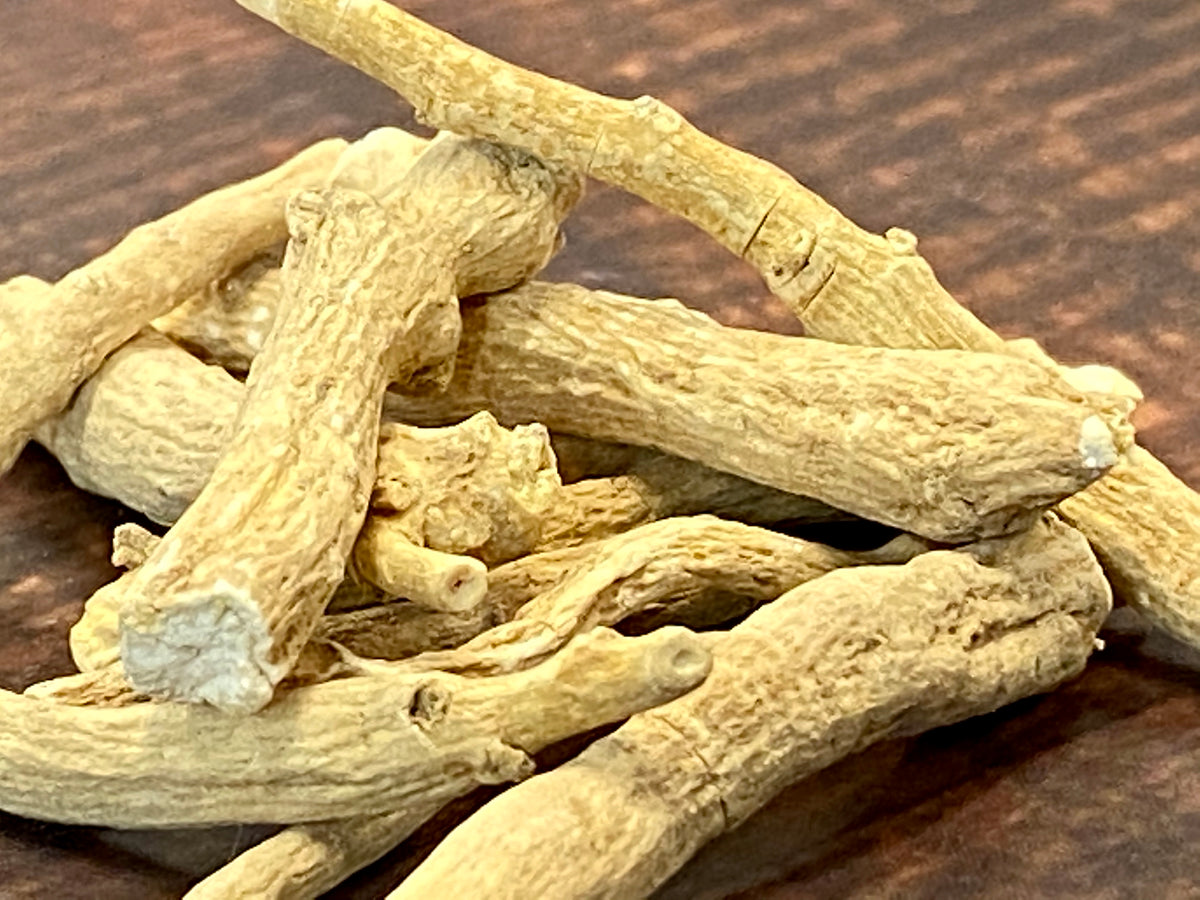
"Ashwagandha Root" by Formulatehealth.com is licensed under CC BY 2.0. To view a copy of this license, visit https://creativecommons.org/licenses/by/2.0/.
What Ashwagandha Actually Is
Ashwagandha (Withania somnifera) is a root used in Ayurvedic practice for over 3,000 years. It belongs to a category called adaptogens, which are botanicals that help the body maintain balance during periods of stress without over-stimulating or suppressing normal function. That distinction matters. Ashwagandha is not a sedative. It is not a stimulant. It works more like a calibration tool for the body's stress response system.
The plant grows mainly in India, North Africa, and parts of the Mediterranean. The active compounds in the root are called withanolides, and they are why quality supplements use standardized extracts rather than raw root powder. Two of the most researched extract forms are KSM-66 (standardized to 5% withanolides, root only) and Sensoril (standardized to 10% withanolides from root and leaf). These names reflect distinct extraction processes and the specific human trials built around each one.
Cortisol and the Stress Cascade
Cortisol is released by the adrenal glands in response to perceived stress. Short bursts are functional. They sharpen attention, mobilize energy, and help you respond quickly to demands. The challenge arises when the system stays activated over days or weeks.
Even when cortisol stays within a normal range, sustained higher-end levels can create background noise that colors how you feel. Mood becomes more reactive or flatter than usual. Sleep depth tends to decrease. And interest in intimacy, both emotional and physical, often quiets down, because the body's priority hierarchy has shifted. It is not a failure. It is the nervous system doing exactly what it was designed to do: focus resources on the perceived threat and deprioritize connection.
Recognizing this pattern is genuinely useful. It reframes the conversation away from willpower and toward physiology.
How Ashwagandha Supports a Balanced Stress Response
Several controlled human trials have looked directly at ashwagandha's effect on serum cortisol. A 2012 study in the Indian Journal of Psychological Medicine found that participants taking 300 mg of ashwagandha root extract twice daily for 60 days showed meaningfully lower cortisol levels compared to placebo. A 2019 study published in Medicine found similar patterns with a 240 mg daily dose of a standardized extract.
The proposed mechanism centers on the hypothalamic-pituitary-adrenal (HPA) axis, the feedback loop that governs how the body ramps cortisol up and brings it back down. Withanolides appear to support the efficiency of this loop, helping the system return to baseline more readily after activation. The result is not blunted reactivity. It is a more proportionate response and a faster recovery.
This matters specifically for women. Research suggests women may show stronger cortisol responses to social and evaluative stressors than men. The HPA axis is also in close communication with reproductive hormones, so supporting cortisol regulation has downstream effects on the broader hormonal environment.
Stress Hormones and Intimate Connection
Customers often ask us whether ashwagandha does anything for mood. The honest answer is nuanced. Mood is downstream of many variables: sleep quality, nutrition, hormonal status, relationship context. Ashwagandha does not target mood directly. What it supports are the physiological conditions that make a more even emotional tone easier to maintain.
When cortisol is better regulated, the autonomic nervous system tends to shift toward parasympathetic function more readily and stay there longer. That state promotes feelings of safety, calm, and openness. Many women describe this as emotional readiness, a feeling of being available to connection rather than defended against it. Openness is where intimacy actually starts.
A 2015 randomized trial published in BioMed Research International looked specifically at KSM-66 ashwagandha in women and found improvements in arousal, lubrication, and satisfaction scores compared to placebo after eight weeks. The researchers pointed to reduced perceived stress and improved overall wellbeing as the primary drivers. That finding aligns with what the cortisol data would predict: lower stress burden creates more room for connection.
Not All Ashwagandha Is the Same
Raw root powder and standardized extract are not interchangeable. Raw powder contains withanolides at unpredictable concentrations that vary by harvest region, soil quality, and storage conditions. Standardized extracts fix that variable.
Most trials supporting mood and cortisol outcomes used doses between 240 mg and 600 mg of standardized extract daily. Higher doses are not necessarily more effective. The 240 mg dose in the 2019 study performed comparably to the 600 mg total daily dose in the 2012 trial. Consistency over several weeks matters more than any single large dose.
- KSM-66: Root-only extraction, standardized to 5% withanolides. Has the largest body of human trial data for energy, mood, and cortisol outcomes specifically.
- Sensoril: Root and leaf extraction, standardized to 10% withanolides. Appears more often in formulas focused on relaxation and sleep support.
- Heavy metal testing: Ashwagandha is a hyperaccumulator, meaning it can concentrate metals from soil. Third-party testing for cadmium, lead, and arsenic is not a nice-to-have.
Delivery format also plays a role in absorption. Some extracts work more readily when taken with food. Chewable or gummy formats that begin dissolving in the mouth may offer faster uptake than standard capsules for certain users.
What to Look For in a Formula
Reading a supplement label takes about 90 seconds and tells you a lot. A few markers worth checking:
- Standardized extract form (KSM-66 or Sensoril), not plain "ashwagandha root powder"
- Withanolide percentage disclosed on the label (typically 2.5% to 10%)
- Dose within the studied range (240 to 600 mg)
- Third-party testing for heavy metals, documented on the brand's website
- Clean carrier ingredients with minimal unnecessary fillers
In our formula, we use KSM-66 at a dose consistent with the published evidence on cortisol and mood outcomes. It is combined with complementary botanicals selected for how they work alongside the body's stress response, not just because they are trending.
Building a Routine That Actually Works
Adaptogens accumulate effect over time. Most people notice a shift in emotional steadiness after four to eight weeks of daily use. Taking ashwagandha at the same time each day helps maintain consistent blood levels. Many women prefer an evening dose because of the mildly calming quality of the extract.
Pairing it with supportive habits amplifies what it can do. A 10-minute screen-free wind-down before bed. A short walk after dinner. Meals that do not spike blood sugar dramatically. Supplements work best inside an environment that is not demanding constant cortisol output. They are not a fix layered on top of a non-stop lifestyle.
If you are looking for a daily adaptogen supplement for women grounded in actual trial data, understanding the mechanism is the most useful starting point. Ashwagandha's evidence base on the cortisol-mood axis is one of the more consistent ones in the botanical category.
Frequently asked questions
How long before ashwagandha supports a change in stress resilience or emotional steadiness?
Most clinical trials run for eight weeks and show meaningful changes in cortisol levels already within a normal range and self-reported wellbeing by that point. Some people notice a shift in mood steadiness within four weeks. Daily use without gaps matters more than timing or dose size.
Is it safe to take ashwagandha every day?
The trials that produced the strongest cortisol and mood data used daily dosing over 60 days without breaks. Ashwagandha has a favorable safety profile in healthy adults at studied doses (240 to 600 mg of standardized extract). If you are pregnant, nursing, or taking prescription medications, check with your healthcare provider before starting.
Does ashwagandha affect estrogen or other reproductive hormones?
Ashwagandha does not act like estrogen in the body. Its primary mechanism is through the HPA axis and cortisol regulation rather than direct action on sex hormones. Some research suggests it may help maintain testosterone levels already within a normal range in women, which plays a role in energy and libido, but it is not a hormone replacement.
What is the difference between KSM-66 and Sensoril ashwagandha?
KSM-66 is extracted from root only, standardized to 5% withanolides, and has the most human trial data for energy, mood, and cortisol outcomes. Sensoril uses root and leaf, standardizes to 10% withanolides, and appears more often in formulas targeting relaxation and sleep. Neither is categorically better. The right choice depends on your primary goal.
Can ashwagandha be taken alongside other supplements?
Ashwagandha is generally well-tolerated alongside vitamins, minerals, and most common supplements. Combining it with other adaptogens such as rhodiola or maca is considered complementary by many practitioners. Individuals taking thyroid medication should consult their provider, as ashwagandha may support thyroid hormone levels already within a normal range in some individuals.
These statements have not been evaluated by the Food and Drug Administration. This product is not intended to diagnose, treat, cure, or prevent any disease.
Written by The Minx Editorial, Women's Wellness Editor.
Read more
Fatigue, flat mood, slower recovery? These five body signals may point to low zinc intake. Learn what zinc supports and how to close the nutritional gap.

L-arginine vs citrulline compared for nitric oxide and circulation support. Learn which precursor works better for men and how to choose. Shop MINX MAN CUBES.