
How High Cortisol Quietly Dampens Women's Desire
Cortisol, your body's primary stress hormone, directly competes with the hormones that support sexual desire. When the HPA axis stays activated for weeks or months, the body redirects resources away from reproductive function, leaving desire muted, muffled, or absent altogether.
The HPA Axis: Your Body's Stress Command Center
Three small structures sit at the center of your stress response: the hypothalamus, the pituitary gland, and the adrenal glands. Together they form the HPA axis. Think of it as a chain of command. The hypothalamus detects a threat, pages the pituitary, and the pituitary tells the adrenals to release cortisol.
For a bear chase, this system is brilliant. Cortisol sharpens focus, raises blood sugar for fast fuel, and redirects blood flow to the muscles that need it most. You survive. Crisis over.
The problem is that your body runs the same cascade for a 9 PM inbox notification as it does for actual danger. The HPA axis does not distinguish between a predator and a passive-aggressive email. It just fires.
When that firing becomes chronic, a low hum of activation day after day, the downstream effects reach every corner of the body. Including the systems that support desire.
How Cortisol Competes Directly with Desire Hormones
Here is where things get cellular. Both cortisol and the sex hormones your body relies on for desire share the same raw material: a molecule called pregnenolone. Your body synthesizes pregnenolone from cholesterol and then converts it down different pathways depending on what it needs most.
Under chronic stress, the adrenals pull pregnenolone heavily toward cortisol production. Less of it travels down the pathway toward testosterone and estrogen. Some researchers refer to this pattern as "pregnenolone steal," and while the term is still debated in clinical literature, the underlying hormonal competition is well-documented at the enzymatic level.
The result is a hormonal budget problem. Your body is not broken. It is prioritizing. But its priorities leave little room for desire.
Research compiled across several PubMed-indexed studies on cortisol and women's sexual interest consistently finds the relationship most pronounced under conditions of chronic rather than acute stress. The effect is not trivial, and it is not in your head.
The Nervous System Piece Nobody Talks About
Two modes run your nervous system. The sympathetic mode, sometimes called fight-or-flight, keeps you ready to react. The parasympathetic mode, the rest-and-digest state, is where the body settles into repair, pleasure, and intimacy.
Cortisol is sympathetic-nervous-system fuel. It keeps you alert and vigilant. Useful at 10 AM in a meeting. Counterproductive at 10 PM with your partner.
Desire requires parasympathetic activation. Blood flow shifts toward pelvic tissues. The body becomes receptive rather than reactive. That shift cannot fully happen while cortisol is elevated. The signal does not get through, not because anything is wrong with you, but because two competing signals are traveling the same wires at the same time.
The absence of desire under stress is not a personal failing. It is the nervous system behaving exactly as designed. Recognizing that distinction changes how you approach the whole problem.
The Dopamine and Mood Connection
Cortisol does not only compete with sex hormones. It also affects the neurotransmitter systems that govern motivation and anticipation.
Dopamine is the molecule behind wanting. It drives the seeking behavior that makes you lean toward pleasure in the first place. Sustained cortisol exposure has been shown to suppress dopamine activity in brain regions involved in reward and motivation. Without adequate dopamine tone, the mental spark that precedes desire fades before any physical signal even has a chance to arrive.
Serotonin is affected too. When cortisol stays elevated, serotonin availability can shift, altering baseline mood in subtle ways. Lower mood reduces receptivity to desire signals. The loop becomes self-reinforcing: stress suppresses desire, the absence of intimacy increases emotional distance, which feeds more stress.
Customers often ask us why a formula designed to support desire includes mood-supporting botanicals at all. This is why. Desire is not purely physical. It begins in the brain, well before the body responds.
What Chronic Stress Actually Looks Like
Acute stress is temporary. You give a presentation, cortisol spikes, it returns to baseline within hours. Your desire returns too.
Chronic stress is a different animal. It might show up as:
- Persistent fatigue that sleep does not fully resolve
- A general sense of emotional flatness or numbness
- Difficulty feeling present during intimate moments
- Reduced responsiveness to touch or sensation
- A gap between intellectual willingness and physical readiness
None of these signals point to disease. They are the body communicating that resources are stretched. Recognizing the pattern is the first step toward addressing it meaningfully.
A study in the Journal of Sexual Medicine noted that perceived psychological stress was among the strongest predictors of decreased sexual desire in women aged 25 to 55, outperforming hormonal measurements as a standalone variable. Stress as an experience, not just cortisol as a number, matters.
Adaptogens, Botanicals, and Supporting Balance
Adaptogens are a category of plants studied for their potential to support the body's stress-response systems. The goal is not to suppress cortisol entirely (you need it) but to help the body maintain healthy cortisol levels already within a normal range, so the HPA axis can return to baseline more readily after activation.
Panax ginseng has been used in traditional Eastern medicine for centuries and has since been studied in modern human trials. Research has explored its role in supporting healthy stress responses already within normal parameters, making it one of the most well-documented adaptogens available.
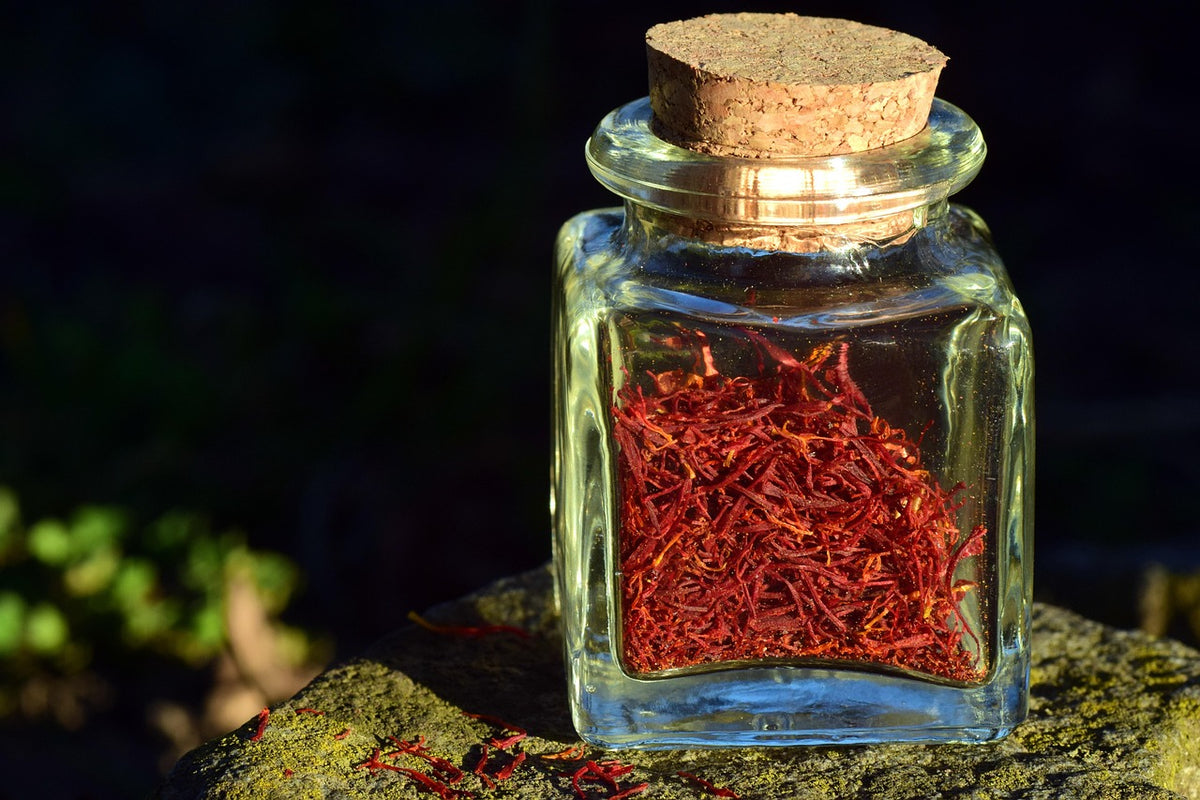
Saffron has attracted growing attention for its potential to support mood and the neurotransmitter activity that underlies it. A growing body of PubMed-indexed research on saffron and mood shows meaningful differences compared to placebo across multiple study designs, particularly for women.
Mucuna pruriens contains L-DOPA, a direct precursor to dopamine. The brain converts L-DOPA to dopamine through a well-understood enzymatic process, helping maintain the motivational tone that desire depends on in the first place.
L-citrulline works through a different mechanism entirely. The body converts it to L-arginine, which supports nitric oxide production. Nitric oxide promotes healthy blood vessel relaxation and blood flow, including to pelvic tissues, where adequate circulation supports the physical signals behind arousal.
Beetroot completes the blend. Naturally rich in dietary nitrates, it provides a complementary path toward nitric oxide support, working alongside L-citrulline rather than simply duplicating it.
The team at our Minx shop formulated these five botanicals together because the science of desire is not one pathway. It is a network. Addressing only one thread leaves the others untouched.
Daily Habits That Support Cortisol Balance
No supplement works in isolation. The lifestyle context matters as much as the formula.
Sleep is the most powerful cortisol regulator you have access to. Cortisol follows a diurnal rhythm: it should peak in the early morning to help you wake, then decline steadily through the day. Disrupted sleep keeps that pattern jagged and elevated at hours it should be low. Seven to nine hours, consistently, is not a luxury. It is infrastructure.
Movement helps, but intensity matters. Moderate, consistent exercise supports healthy cortisol regulation already within a normal range. Intense daily training without adequate recovery can push cortisol upward rather than down.
Parasympathetic practices, including slow breathing, time in nature, physical touch, and even laughter, directly counteract the sympathetic activation that cortisol promotes. Ten minutes of intentional stillness in the evening is not indulgent. It is neuroscience applied to daily life.
Nutrition plays a supporting role. Blood sugar swings trigger cortisol release, so meals that pair protein, fat, and fiber help the body maintain steadier glucose, keeping one cortisol trigger quieter through the day.
These habits form the foundation. Botanical support is most effective when built on top of them, not used to compensate for their absence.
Frequently asked questions
Can stress really dampen desire in otherwise healthy women?
Yes, through well-documented mechanisms. Cortisol competes with the hormones that support desire, suppresses dopamine activity involved in motivation, and keeps the nervous system in a reactive state that works against intimacy. None of this indicates a medical condition. It is the body responding to its environment exactly as designed.
What exactly is the HPA axis?
The HPA axis is the hormonal communication loop between your hypothalamus (in the brain), your pituitary gland, and your adrenal glands. When you perceive stress, the hypothalamus initiates a signal that ends with the adrenals releasing cortisol. This system regulates how the body responds to challenge and (ideally) returns to a rested baseline.
How long does cortisol need to stay elevated before it affects desire?
Acute spikes rarely affect desire long-term. Research suggests the effects become more pronounced with sustained or chronic elevation, generally when the stress response fires repeatedly over weeks without returning to a full rested baseline. Individual variation is real, and some women notice the pattern sooner than others.
What do adaptogens like Panax ginseng actually do?
Adaptogens are studied for their potential to help the body maintain healthy stress responses already within a normal range. By supporting HPA axis regulation, they may help create conditions where desire signals are less likely to be crowded out. The effect is supportive, not stimulant-like, and it builds over consistent use.
Should I speak with a doctor if stress seems to be affecting my desire?
If changes in desire concern you or arrive alongside other symptoms, a conversation with a healthcare provider is always a reasonable step. Desire exists on a spectrum and is shaped by many factors. Lifestyle habits and botanical support work alongside professional guidance when it is needed, not instead of it.
These statements have not been evaluated by the Food and Drug Administration. This product is not intended to diagnose, treat, cure, or prevent any disease.
Written by The Minx Editorial, Women's Wellness Editor.
Read more
Shatavari has supported women's hormonal comfort in Ayurvedic tradition for millennia. Discover its origins, active compounds, and modern research at Minx.
Poor sleep, muscle tension, and mood shifts may signal that your body wants more magnesium. Learn the signs and explore support for intimate wellness.