

Damiana: The Herb You've Probably Never Heard Of
Damiana (Turnera diffusa) is a small flowering shrub native to Mexico and Central America. Traditional herbalists have valued its leaves for centuries as a calming botanical. Its flavonoid content, including apigenin and arbutin, is now the focus of growing scientific interest in women's intimate wellness.
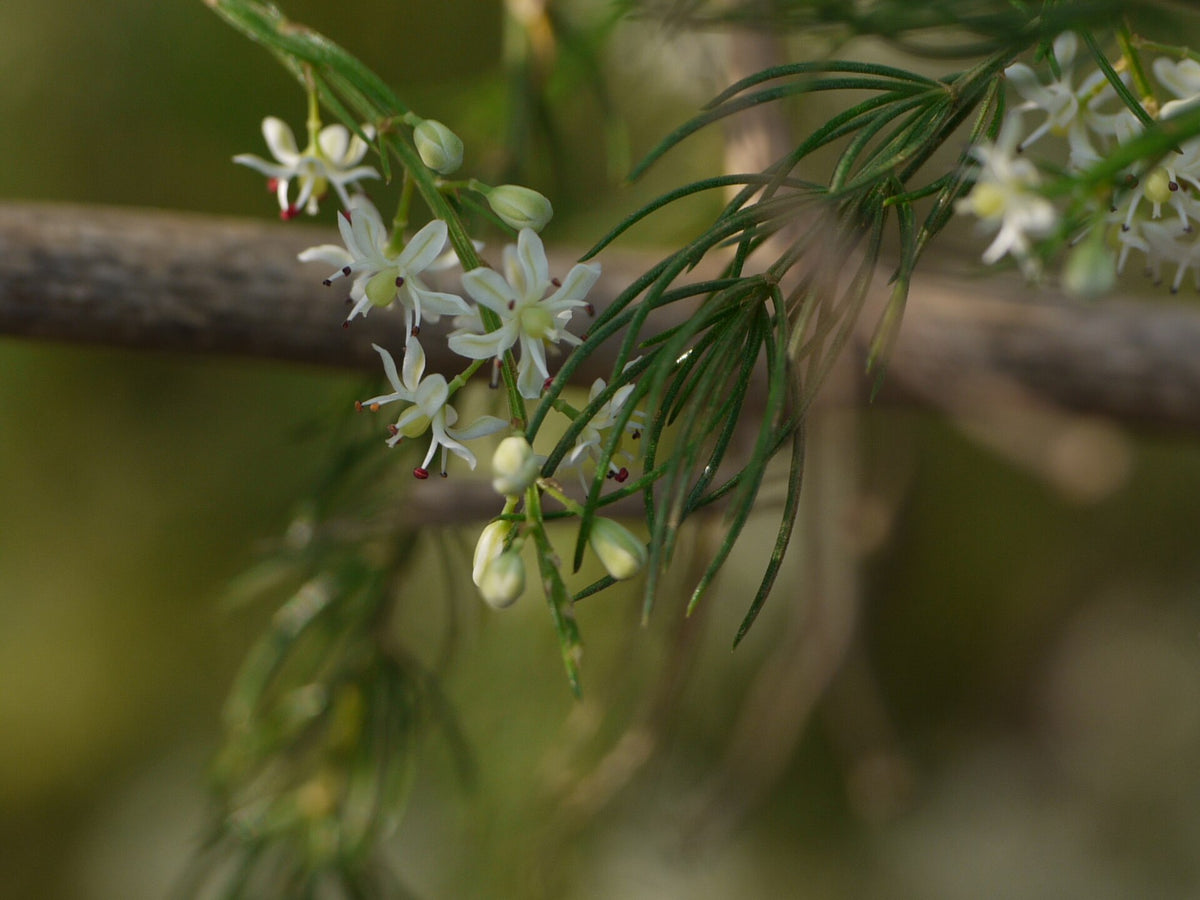
User:Brandon lopez007 / CC BY-SA 3.0 / via Wikimedia Commons
What Exactly Is Damiana?
Damiana is a small, flowering shrub. Botanically it goes by Turnera diffusa, and it grows wild across Mexico, Central America, and parts of the Caribbean, preferring dry, rocky soils where little else takes hold. The leaves are what herbalists have always prized: pale green, lightly serrated, and intensely aromatic when crushed between your fingers. The scent sits somewhere between chamomile and dried fruit.
Most people in the United States have never encountered it. That's starting to change. In traditional Mesoamerican botanical practice, damiana has a recorded history stretching back to the Maya. Spanish missionaries traveling through the Yucatan in the 18th century documented a tea brewed from these leaves that local healers used to support calm and general wellbeing. The plant eventually arrived in the U.S. in the 1870s, where pharmacists briefly stocked it as a botanical tonic.
It fell out of mainstream view for a stretch. Now it's quietly coming back.
Centuries of Traditional Use Across Cultures
Herbal traditions rarely survive generations without some basis in observed effect. Damiana's staying power in Mexican, Guatemalan, and Belizean folk medicine speaks to repeated, consistent experience across time, even before anyone had the tools to measure what was happening chemically.
Traditional preparation was straightforward: dried leaves steeped in hot water. Sometimes the tea was combined with other local plants. The goals, across different regional lineages and centuries of practice, were strikingly similar. Easing tension. Quieting an overactive mind. Supporting a sense of ease and openness in the body.
What catches botanical researchers' attention is how often unrelated cultural traditions independently arrived at the same applications for damiana. That kind of cross-cultural convergence does not designed anything scientifically. But it is precisely the pattern that earns serious attention from ethnobotanists and pharmacognosists working to understand which traditional remedies have real biological underpinnings.
The Flavonoids Behind the Reputation
The chemical profile of damiana is reasonably well mapped. The leaf contains a cluster of flavonoids, primarily apigenin, luteolin, and pinocembrin. It also contains arbutin, a glycoside found in several botanicals with traditionally calming reputations. Smaller amounts of terpenes and caffeine-adjacent compounds round out the picture.
Flavonoids are polyphenolic compounds produced by plants as part of their natural chemistry. Research indexed on PubMed has examined how certain plant-derived flavonoids interact with GABA receptors in the nervous system, the same receptor family involved in the body's natural calming response. Apigenin, present in meaningful quantities in damiana, has been among the most studied in this regard.
Arbutin has its own profile. Found also in bearberry and pear skin, it has historically been associated with soothing, grounding properties, though its precise mechanisms within damiana are still an active area of inquiry.
No single compound likely explains the full picture. Herbalists have long argued that whole-plant preparations behave differently than isolated extracts, a concept sometimes called the entourage effect in botanical medicine. The combination of flavonoids, terpenes, and trace compounds in damiana may work together in ways that isolated fractions simply don't replicate.
Why Relaxation Comes Before Everything Else
Here is the part most wellness editors skip. The traditional applications of damiana were never about direct stimulation. They were about removing obstacles to ease.
Stress does something specific to the body. It activates the sympathetic nervous system, the branch responsible for vigilance, alertness, and physical tension. That state is functionally the opposite of what supports intimacy. When the nervous system is busy scanning for threats, the body's natural capacity for warmth, presence, and openness tends to quiet down. This is physiology, not a personal failing.
Damiana's historical role was as a nervine, a category of herbs that traditional practitioners used to support the nervous system's ability to settle. By helping the body find a calmer baseline, the thinking goes, the conditions for genuine receptivity naturally open. The herb does not push anything forward. It creates better conditions.
This distinction matters more than it might seem. Botanicals that support relaxation occupy a very different category than stimulants. Damiana has traditionally sat in that quieter, more foundational space, and it's worth understanding why that matters specifically for women's wellness.
What the Research Actually Shows
The scientific literature on damiana is modest but growing. Several animal studies have examined the herb's effect on nervous system activity, and a handful of reviews have looked at its flavonoid content against the backdrop of its traditional claims.
Studies indexed on PubMed examining Turnera diffusa extract in animal models have identified flavonoid compounds as likely contributors to the nervine-type effects that traditional herbalists consistently described. The biological mechanisms proposed align with what researchers know about how apigenin interacts with the central nervous system.
The honest caveat: large-scale, placebo-controlled human trials on damiana don't yet exist. It remains in the category of botanicals with a compelling traditional record and a promising but still-developing scientific one. Researchers are interested. The work is ongoing.
Customers often ask us about the evidence behind the botanicals in our formulas. Our answer is always the same: we share what the research shows, we flag what's still emerging, and we don't overclaim. That's the only honest way to talk about plants.
How Damiana Fits Into a Layered Formula
Damiana rarely appears alone in contemporary women's wellness products. Its historical use was almost always in combination with other botanicals, and modern formulation practice follows the same logic. Herbs that address different aspects of the same physiological goal can reinforce one another in ways no single botanical achieves alone.
In a thoughtfully built formula, damiana handles the nervous system side of things: the settling, the calming, the quiet clearing of internal friction. Ingredients that support healthy circulation, like L-citrulline, which the body converts to nitric oxide to help maintain blood flow already within a normal range, address a different piece of the picture. Saffron, valued for its role in supporting mood already within a normal range, adds another layer. Adaptogens like Panax ginseng help the body maintain its natural adaptive balance under daily stress. Each ingredient does something distinct. Together, they cover more ground than any one herb could.
Understanding where damiana fits helps explain why it's appearing more frequently in women's wellness formulas. It's not about force. It's about creating the right internal conditions for the body's natural responses.
The team at our shop takes a similar layered approach, drawing on both traditional use records and available research to select botanicals that genuinely complement one another.
How to Use Damiana Daily
Dried damiana leaf tea is the oldest preparation and still entirely practical. A standard infusion uses one to two teaspoons of dried leaf per cup of near-boiling water, steeped for ten minutes, covered. The flavor is mild and slightly bitter, pleasant plain or with honey. Some people blend it with chamomile or spearmint for a more rounded cup.
Tinctures offer a more concentrated form. Capsules and standardized extracts are widely available, though quality varies significantly. A few things worth looking for before buying:
- Product specifies leaf, not stem or root
- Extraction method is clearly disclosed
- Certificate of analysis confirming flavonoid content is available on request
- No undisclosed fillers or binders
Gummy and functional formats have made consistent daily intake much easier, particularly for people who find teas impractical during busy mornings. Whatever form you choose, consistency matters more than any single dose. Nervines generally work better as a sustained daily practice than as an occasional one-off.
As with any botanical supplement, speak with your healthcare provider before adding damiana to your routine if you are pregnant, breastfeeding, or taking prescription medications.
Frequently asked questions
What does damiana taste like?
Damiana tea has a mild, slightly bitter flavor with herbal and faintly fruity undertones. Most people find it pleasant on its own. The dried leaf is quite aromatic, and that fragrance carries through into the brewed cup. A small amount of honey pairs well with the gentle bitterness, and it blends easily with mint or chamomile.
How long before I might notice effects from damiana?
Nervine herbs typically build up over time rather than producing sharp, immediate changes. Most traditional herbalists recommend allowing two to four weeks of consistent daily use before evaluating effects. Some people notice a subtle shift in their baseline sense of ease sooner, but the traditional context has always framed damiana as an ongoing daily practice rather than a quick-acting intervention.
What makes damiana different from ordinary calming herbs?
Most common calming herbs, like chamomile or valerian, lean primarily sedating. Damiana traditionally sits in a slightly different category: calming without heavy drowsiness. Traditional herbalists used it specifically to support ease and receptivity rather than sleep. Its flavonoid profile, particularly its apigenin content, may account for this qualitative difference. It helps settle without dulling.
Is damiana safe for long-term daily use?
Damiana has a long history of daily traditional use without reported toxicity at standard amounts. Consistency at moderate amounts tends to be better tolerated than irregular high doses. Pregnant or breastfeeding individuals should consult a healthcare provider before use. Damiana does not supports, prevent, or reverse any medical condition and is not a substitute for professional medical evaluation.
Does damiana appear in women's wellness supplements?
Yes, increasingly. Damiana is appearing in botanical blends designed to support relaxation and receptivity, often alongside adaptogens and mood-supporting herbs. Its nervine properties complement ingredients that work on circulation or emotional balance, making it a useful supporting player in a layered formula. Look for products that clearly specify the plant part used and provide third-party testing documentation.
These statements have not been evaluated by the Food and Drug Administration. This product is not intended to diagnose, treat, cure, or prevent any disease.
Written by The Minx Editorial, Women's Wellness Editor.
Read more
Shatavari's phytoestrogenic properties and Ayurvedic roots, explained. How this tonic herb supports women's cyclical energy and mood. From The Minx Editorial.
Midday crashes, flat mood, and low stamina can signal a need for more adaptogenic support. Learn the signs and what botanicals like maca offer women.