
Damiana Leaf: The Overlooked Herb for Women
Damiana (Turnera diffusa) is a flowering shrub native to Mexico and Central America with a long history in traditional women's wellness practices. Its leaves contain flavonoids, essential oils, and bitter compounds that may support mood, energy, and intimate wellbeing as part of a consistent daily botanical routine.
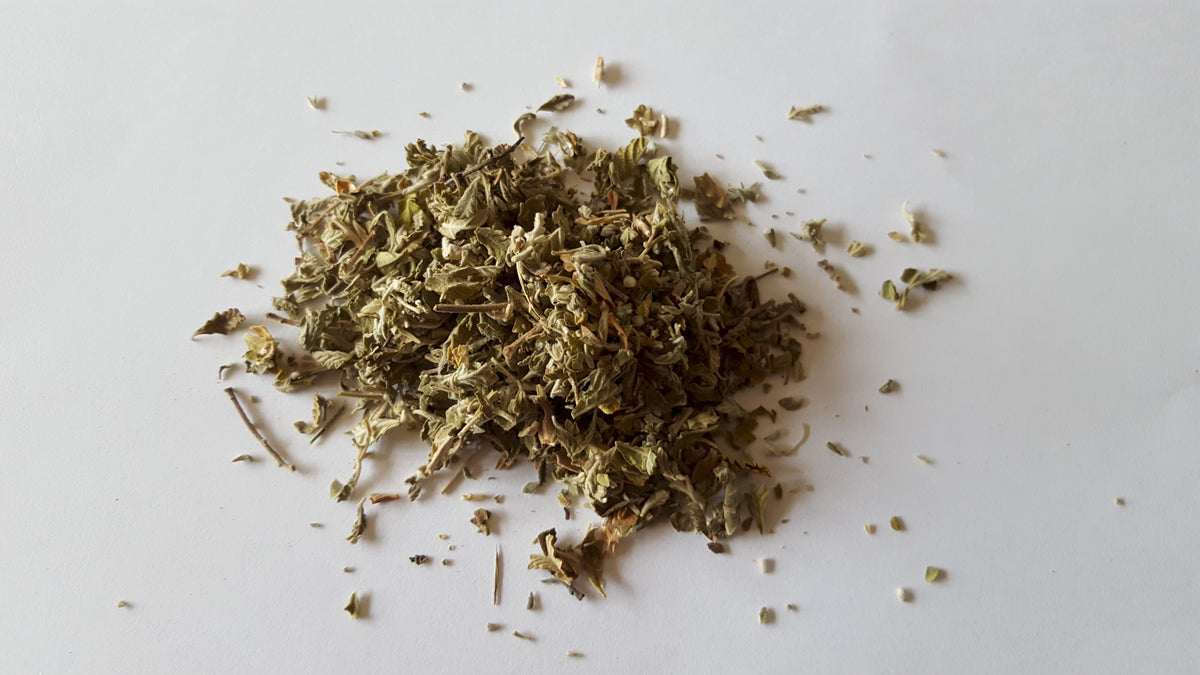
"Damiana (Turnera Diffusa)" by DMTrott is licensed under CC BY-SA 4.0. To view a copy of this license, visit https://creativecommons.org/licenses/by-sa/4.0/.
What Is Damiana?
Turnera diffusa. It grows wild across the dry hillsides of Mexico, Guatemala, and parts of the Caribbean: small and unassuming, with bright yellow flowers and narrow aromatic leaves that smell faintly like chamomile crossed with something earthier. Most people have never heard of it. That is part of the problem.
Damiana has been used for at least a thousand years in Mesoamerican folk medicine, long before any laboratory existed to explain what it was doing. Mayan healers brewed it as a tea. Mexican curanderas reached for it specifically for women's concerns. Spanish colonial-era records note its use as a tonic, though they were predictably vague about what kind of tonic.
Today it shows up in a small number of women's wellness formulas, usually listed quietly at the bottom of a proprietary blend, dwarfed by maca or ashwagandha. That undersells it. Damiana deserves to be understood on its own terms before you start stacking it with other herbs.
The Active Compounds Worth Knowing
The chemistry of damiana is quite complex for a plant that gets so little attention. Several groups of compounds stand out:
- Flavonoids: apigenin, luteolin, and acacetin. These are the most studied active constituents. Apigenin has attracted particular research attention for its interactions with cellular signaling pathways. Researchers have examined damiana's flavonoids for their effects on aromatase activity, an enzyme involved in estrogen metabolism.
- Gonzalitosin I: a cyanogenic glucoside unique to this plant, present in small amounts in the whole leaf.
- Arbutin: also found in bearberry and cranberry, associated with general urinary wellness support.
- Damianin: a bitter, resin-like compound considered responsible for much of the leaf's characteristic taste and aroma.
- Essential oils: cineole, thymol, and alpha-pinene. These contribute to damiana's herbal scent and its overall botanical fingerprint.
- Beta-sitosterol: a phytosterol also found in saw palmetto, associated with general hormonal balance support already within a normal range.
No single compound tells the whole story. The plant works as a system, which is why standardized whole-leaf or full-spectrum extracts tend to make more sense than isolated constituents.
Centuries of Use in Women's Wellness
Traditional plant medicine rarely survives a thousand years without doing something useful. Damiana's persistence in women's herbal traditions across Central America, the Caribbean, and eventually Europe says something about its reputation.
Historically, it was used in three main ways:
- As a general female tonic, taken regularly rather than acutely
- To support a calm, relaxed mood during periods of hormonal fluctuation
- To promote healthy intimate desire and sensory responsiveness
None of these traditional uses position damiana as a drug. That framing was intentional. Traditional herbalism understood plants as supporters of normal function, not correctors of disease. Damiana was used by women who were well and wanted to stay that way.
By the late 1800s, damiana had briefly entered the United States Pharmacopeia before being removed as pharmaceutical drugs eclipsed botanical medicine. Its use continued in folk traditions, particularly in communities that maintained traditional healing knowledge, and it re-emerged during the herbal revival of the 1970s. It has never quite broken into the mainstream. That gap is changing, slowly.
What Current Research Suggests
The scientific literature on damiana is modest compared to ashwagandha or rhodiola. It exists, though, and points in directions consistent with traditional use.
A body of work has examined damiana's flavonoids, particularly apigenin and acacetin, for their interaction with aromatase enzymes. Aromatase converts androgens to estrogens in peripheral tissue, and compounds that influence this enzyme have implications for hormonal balance support already within a normal range. This is not hormone therapy. It is one biochemical pathway among many that a botanical compound may influence gently over time.
Separate research has looked at damiana's effects on smooth muscle tissue and circulation, with animal studies showing results consistent with traditional accounts of its role in intimate wellness. Human trials remain limited. The National Center for Complementary and Integrative Health acknowledges that many traditional botanicals are still in early research stages, which is accurate for damiana.
Customers often ask us whether damiana has been studied directly in women. The honest answer: some, not enough, and the traditional record carries real weight in filling that gap. That is the current state of most women's botanicals.
Botanical Synergy: Damiana's Best Partners
Damiana works particularly well in combination. Here are the pairings that make the most sense from both a traditional and phytochemical perspective:
- Maca root (Lepidium meyenii): Both plants carry histories of use for female vitality and intimate wellness. Maca's glucosinolates and damiana's flavonoids work on different pathways, making them complementary rather than redundant.
- Muira puama: A Brazilian bark with its own long traditional reputation for women's desire and sensory wellness. Used alongside damiana in South American folk medicine for generations.
- Ashwagandha (KSM-66 or Sensoril): As an adaptogen, ashwagandha helps the body maintain a balanced stress response. Chronic stress is one of the primary factors that disrupts mood and intimate wellbeing. Damiana supports the outcome; ashwagandha supports the foundation.
- Ginkgo biloba: Ginkgo promotes healthy circulation already within a normal range. Circulation matters for sensory responsiveness, making it a logical complement to damiana's traditional benefits.
The goal is not to throw everything together and hope something works. It is to select botanicals whose mechanisms support each other in a coherent, considered way.
What to Look for in a Damiana Formula
Quality matters more with damiana than with some herbs because the plant is easy to adulterate and poorly standardized across the industry. A few markers worth checking:
- Whole leaf versus extract: Whole leaf retains the full compound profile, including essential oils and bitter compounds often stripped in aggressive extraction. A 4:1 or 5:1 extract means four to five parts of the dried leaf concentrated into one part final product, which increases potency but may shift the compound ratio.
- Standardization: Some manufacturers standardize to total flavonoid content. Useful for batch-to-batch consistency, though standardization alone does not capture the full plant chemistry that makes damiana work as a system.
- Sourcing transparency: Wild-harvested Mexican damiana is generally considered higher quality than cultivated material from other regions. The volcanic soils where it grows natively tend to produce a more aromatic, resinous leaf with a denser compound profile.
- Formula context: Damiana alone is good. Damiana in a well-designed stack, at a meaningful dose, with herbs that extend its effects, is considerably better. Look at what surrounds it.
For women who want to experience this synergy firsthand, MINX CUBES intimate wellness gummies bring together damiana with its best botanical partners in one carefully considered formula.
Making Damiana Part of Your Routine
Consistency matters more than timing. Most traditional preparations were taken daily, not situationally. Think of damiana less like a pre-event supplement and more like a multivitamin: the value builds over weeks, not hours.
Common forms and approaches:
- Daily supplementation with a standardized gummy, capsule, or tincture
- Tea made from dried whole leaf (bioavailability is generally lower than extract forms, but tea carries its own ritual benefit)
- Combination formulas that include synergistic herbs for broader daily support
A reasonable starting point is the dose shown on your chosen product's label, taken at the same time each day. Morning or evening both work. What matters is the habit. Most people who stick with a botanical tonic for four to six weeks develop a clearer sense of whether it suits them than those who try it once or twice and move on.
Sleep, nutrition, and stress management always sit underneath any herbal routine. Damiana does not replace those foundations. It supports a body that already has the basics in place. If you are pregnant, nursing, or taking any medications, speak with a qualified healthcare provider before adding any botanical supplement to your routine.
Frequently asked questions
What does damiana leaf do for women?
Damiana has traditionally been used as a women's botanical tonic to support mood, energy, and healthy intimate desire. Its active flavonoids and phytosterols may help promote a relaxed, receptive state and support libido already within a normal range when taken consistently over time.
How long does it take for damiana to have an effect?
Traditional use always treated damiana as a tonic, meaning consistent daily intake builds over time rather than producing an immediate response. Most people who use botanical tonics notice a meaningful shift after two to four weeks of regular use.
Can I take damiana every day?
Yes, daily use is consistent with both traditional practice and how botanical supplements generally work. As with any supplement, follow the dosage guidance on your specific product and consult a qualified healthcare provider if you have individual health considerations.
What herbs pair well with damiana?
Maca root, muira puama, ashwagandha, and ginkgo biloba all have complementary profiles to damiana. Each addresses a different aspect of women's vitality and intimate wellness, so combining them thoughtfully tends to amplify what each plant brings on its own.
Is there scientific research on damiana's benefits?
Research on damiana is ongoing but still limited compared to more widely studied botanicals. Studies have examined its flavonoids and their interactions with estrogen-related enzymes, and animal research supports traditional accounts of its effects on intimate wellness. The traditional record in Mesoamerican medicine spans well over a thousand years.
These statements have not been evaluated by the Food and Drug Administration. This product is not intended to diagnose, treat, cure, or prevent any disease.
Written by The Minx Editorial, Women's Wellness Editor.
Read more
L-arginine supports nitric oxide and healthy circulation for comfort and sensory awareness. See how MINX Cubes can support your intimate wellness routine.
Magnesium supports neurotransmitter balance, muscle relaxation, and the mood-intimacy link. Learn why many women fall short and how to support healthy levels.