
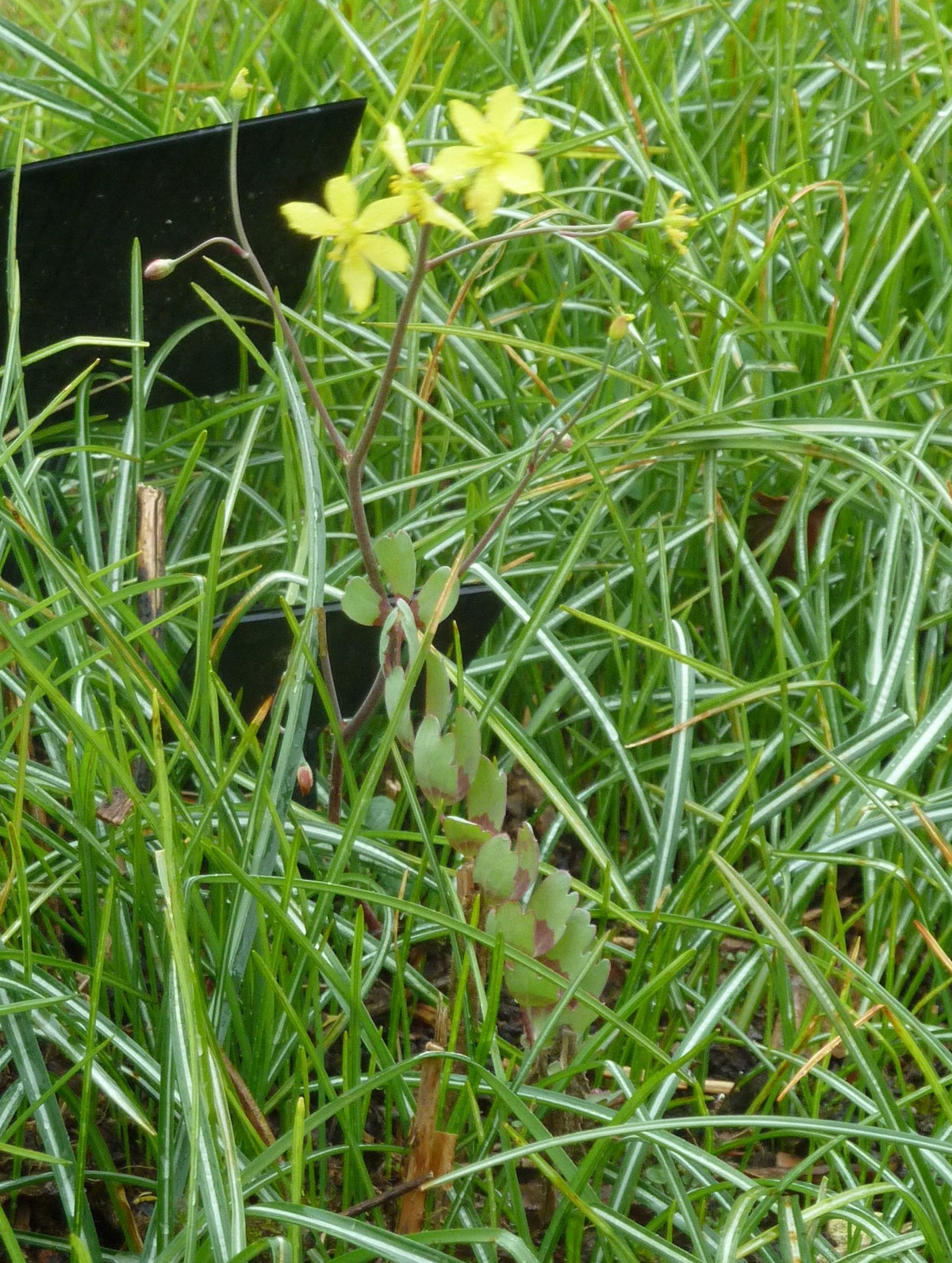
Epimedium: Separating Fact From the Funny Name
Epimedium is a genus of over 60 flowering plants, most native to China, used in traditional herbal practice for centuries. Its primary bioactive compound, icariin, is a flavonoid studied for its role in supporting healthy circulation, male vitality markers, and energy already within normal ranges.
peganum from Small Dole, England / CC BY-SA 2.0 / via Wikimedia Commons
What Actually Is Epimedium?
The name gets laughed at. Horny goat weed. Nearly impossible to say in a professional context without someone smiling. But strip the nickname away and you find a genus of over 60 flowering plant species, most native to China, with a documented history in traditional herbal practice stretching back more than a thousand years.
Traditional Chinese texts reference Yin Yang Huo, loosely translated as 'licentious goat herb,' as a tonic for yang energy and male vitality. The name itself tells you what practitioners were observing. It was not treated as an emergency intervention but as a daily tonic, taken consistently over weeks and months.
The most studied species are Epimedium sagittatum, Epimedium grandiflorum, and Epimedium brevicornum. Herbalists used dried leaf preparations to support male reproductive vitality and musculoskeletal comfort. Modern researchers eventually asked the logical question: what compound is actually doing the work? The answer is icariin.
Icariin: The Compound That Actually Matters
Icariin belongs to a class of plant polyphenols that interact with biological signaling systems. It is the primary bioactive extracted from epimedium leaves, and it is what every serious formulator focuses on when sourcing this herb.
Here is why standardization matters enormously. A raw dried herb powder might contain 1-3% icariin by weight. A standardized extract ranges from 10% to 60% icariin content. The potency difference is not subtle. Customers often ask us whether the form of epimedium matters, and the honest answer is yes, significantly. An unstandardized powder is mostly expensive green dust.
There is also an important distinction between icariin and its metabolites. When you consume icariin, intestinal bacteria convert a portion of it into icariside II, a compound that some research suggests may be even more bioavailable than icariin itself. This metabolic conversion varies by individual gut microbiome, which partly explains why people respond differently to the same dose.
The research on icariin spans circulatory health, bone density markers, hormonal support pathways, and cellular energy metabolism. Most human-applicable studies use daily doses of 150-400 mg of standardized extract, not raw herb powder.
How Icariin Supports Healthy Circulation
This is where the science gets genuinely interesting. Icariin has been identified in lab and animal studies as a natural PDE5 inhibitor. PDE5, or phosphodiesterase type 5, is an enzyme that breaks down cyclic GMP, a molecule that helps smooth muscle tissue relax, including the smooth muscle lining blood vessel walls. By gently modulating this pathway, icariin may help support blood flow through a vasodilatory mechanism.
The effect in whole-herb form is modest. This is not a pharmaceutical-level intervention. A standardized epimedium extract supports circulation already within a normal range. It nudges rather than overrides your body's own vascular signaling. That distinction matters for anyone trying to understand what adaptogens actually do versus what drugs do.
Multiple PubMed-indexed studies have confirmed icariin's structural activity on this pathway while noting its substantially lower potency compared to isolated pharmaceutical compounds. Both facts are equally relevant.
For men, healthy circulation supports energy, physical response, and endurance. That is worth spelling out. Athletic recovery, cardiovascular output, and physical performance are all meaningfully influenced by how efficiently blood reaches tissues. Supporting the vascular system through an adaptogenic herb is a foundational strategy, not a quick fix.
Epimedium and Male Vitality Markers
Icariin also appears in research related to testosterone-associated pathways. Animal studies have found that icariin may support healthy testosterone levels already within a normal range by influencing certain enzymes involved in androgen synthesis. Human data is more limited but directionally consistent.
Several PubMed-indexed reviews have noted consistent patterns across vitality markers in both animal and human trial designs. The directional consistency across different study types is harder to dismiss than any single paper, though researchers uniformly call for larger human trials to confirm effect sizes.
Beyond that, epimedium extracts have been studied for their effects on:
- Nitric oxide production in vascular tissue, which plays a role in supporting healthy blood pressure already within a normal range
- Bone mineral density markers in aging male populations
- Physical endurance and reduced fatigue perception in small controlled trials
None of these findings carry designed. Supplement research in male wellness is variable between individuals. What the data supports: regular use of a quality icariin extract may help maintain several vitality markers that shift with age, all within their normal physiological ranges. That is a measured claim, not a dramatic one. It is also an honest one.
Why Epimedium Earns the Adaptogen Label
Adaptogen is an overused word. It has become marketing language more often than science. But epimedium earns it more than most herbs do.
Adaptogens help the body maintain homeostasis under stress. They modulate rather than push hard in one direction. Epimedium fits this profile through its effects on cortisol-related pathways, its support for energy metabolism without stimulant activity, and its broad-spectrum activity across multiple physiological systems rather than one narrow target.
This is also why epimedium pairs well with other adaptogens. Ashwagandha addresses stress hormone balance. Tongkat Ali provides additional testosterone pathway support. Maca contributes to energy and endurance. Modern male vitality formulas often combine several because the mechanisms are complementary, not redundant.
One distinction worth making explicit: epimedium is not a stimulant. It does not produce the cortisol spike, the rebound fatigue, or the tolerance development associated with caffeine or other stimulant compounds. What it offers is steadier, quieter support. Some men notice nothing dramatic in the first week. That is not a sign it is not working. Adaptogens rarely announce themselves loudly.
Dose, Form, and What to Look For on a Label
A few practical notes before you buy anything.
Research-supported daily doses run 150-500 mg of standardized extract, most commonly split into two doses. Some protocols use higher short-term amounts, but most long-term vitality studies stay in the 200-400 mg range. Below 150 mg of a 10% icariin extract, you are likely below the threshold where most research shows meaningful activity.
Standardized extracts at 20-40% icariin are the sweet spot for most formulas. Higher concentrations exist but are not always better, since absorption and bioavailability are dose-limiting factors independent of concentration.
Red flags on a label: no standardization percentage declared, epimedium buried in a proprietary blend with no disclosed dose, or the herb combined with high-dose stimulants without any transparency about the interaction potential.
In our formula, we use a 40% standardized icariin extract at a dose that reflects the ranges used in circulation and vitality research. Every milligram is declared on the label.
Who Gets the Most From Epimedium Supplementation
Epimedium is not for everyone. No single herb is.
Age is the most common factor. Men in their late 30s and onward who are noticing gradual shifts in energy, libido, recovery, or athletic performance are the core audience for adaptogenic vitality support. These shifts are normal. They are not a disease. They are part of a biological trajectory that daily habits, including thoughtful herbal support, can meaningfully influence.
Men who tend to see the most benefit from icariin supplementation are those already covering their foundations: consistent sleep, resistance training, adequate dietary protein, and manageable stress levels. Adaptogens work best when the basics are in place. Adding an herb to a sleep-deprived, sedentary baseline is like painting a car with a failing engine.
For a man who is doing the work and wants to support his circulatory health, energy output, and vitality markers over time? Epimedium, sourced correctly and dosed properly, is one of the better-supported tools in the herbal toolkit.
See how a well-formulated blend looks in practice with our MINX Man Cubes daily formula, which pairs epimedium with complementary adaptogens at declared doses.
Frequently asked questions
Is epimedium the same thing as horny goat weed?
Yes. Horny goat weed is the folk name for plants in the Epimedium genus. The nickname traces back to old observations of increased activity in goats that grazed on the plant. The botanical genus name is used in scientific literature and on quality supplement labels.
How long should I take epimedium before expecting to notice anything?
Most research protocols run 4-8 weeks before measuring outcomes. Adaptogens generally build their effects over time rather than producing an immediate response. Daily consistency over several weeks is more meaningful than any single dose.
Is epimedium safe to take daily?
Epimedium has a long history of traditional use and standardized extracts are generally well tolerated at research-supported doses of 150-400 mg daily. Anyone on prescription cardiovascular medications should speak with a physician before adding it, since icariin's vasodilatory activity could interact with certain drug classes.
What is the difference between icariin and icariins?
Icariin is one specific flavonoid compound. Icariins refers to a broader group of related prenylated flavonoid glycosides from epimedium, including icariin, icariside II, and others. Both appear in the research. Icariin is the single best-studied compound, and formulas standardized specifically to icariin give you a clearer picture of what you are actually getting.
Can epimedium support bone health alongside vitality?
Research suggests icariin may play a role in supporting bone mineral density markers already within a normal range, particularly in aging male populations. Several animal studies and smaller human trials have examined epimedium extracts in this context. It is one of several reasons the herb has maintained interest across both male wellness and aging research.
These statements have not been evaluated by the Food and Drug Administration. This product is not intended to diagnose, treat, cure, or prevent any disease.
Written by The Minx Editorial, Women's Wellness Editor.
Read more

Learn how the estrobolome links gut microbiome diversity to hormone balance in women, and what you can do to support your own estrogen recycling naturally.

Maca root supports sustained energy via plant compounds called macamides. Discover the science and how to make consistent daily use actually work for you.