The Evening Wind-Down Routine for Intimate Wellness
A consistent evening ritual pairing stress reduction, targeted supplementation with adaptogens like ashwagandha, and quality sleep helps maintain healthy hormonal balance and supports desire over time. The body responds to reliable nightly cues more than to any single product or one-off effort.
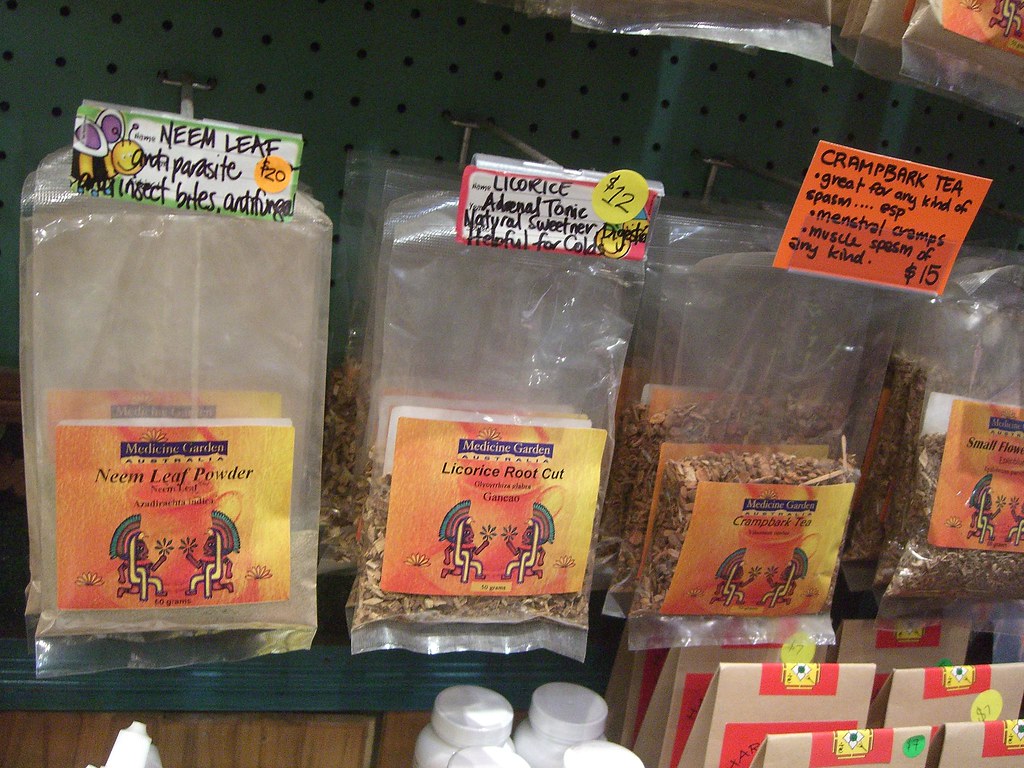
"Neem Leaf, Licorice, Crampbark Tea - Happy High Herbs, Surfers Paradise" by avlxyz is licensed under CC BY-SA 2.0. To view a copy of this license, visit https://creativecommons.or
Why the Evening Is Your Most Useful Window
The body does most of its hormonal housekeeping overnight. During the later phases of sleep, roughly hours five through eight, hormone production and cellular repair run at their highest rate. That window matters more than most people realize.
Arrive at bedtime wound up from a late work call, a scroll through your inbox, or two cups of coffee after noon, and that repair window narrows. Over weeks, the shortfall compounds. Energy drops. Desire follows.
Many women attribute low desire to simply being tired or stressed, which is accurate but incomplete. Tired and stressed are downstream effects of a hormonal maintenance cycle that keeps getting interrupted. Addressing the cycle directly, rather than waiting for stress to resolve on its own, is the more practical approach.
Intimate wellness is not something you switch on. It builds, or it erodes, based on daily inputs. A consistent evening ritual is not self-indulgence. It is maintenance.
The Stress-Desire Connection You Should Know
Cortisol and desire share a seesaw relationship. When the body reads persistent stress signals, it deprioritizes reproductive function. This is not a character flaw. It is a biological prioritization system, and it runs whether you notice it or not.
The mechanism is direct. Sustained high cortisol signals the body to reduce output from the reproductive hormone chain. Estrogen and testosterone production both drop as a result. That chain responds to targeted intervention.
Research published in peer-reviewed journals has found that sustained elevation of stress hormones is associated with measurable changes in arousal and tissue response in women, independent of relationship status or age. The same research suggests that adaptogen supplementation, taken consistently over 8 to 12 weeks, helped support more balanced hormone signaling in studied participants.
That time frame matters. You are not looking for a one-week fix. You are rebuilding a baseline, and evening is when that rebuilding work actually happens.
Step One: Interrupt the Stress Signal Before Bed
This step costs nothing and takes about ten minutes. The goal is to lower cortisol before you get into bed, not after.
- Switch the lighting. Replace overhead lights with a lamp or warm-toned bulb by 8:30 p.m. Bright overhead light suppresses melatonin production for up to 90 minutes after exposure. A single lamp makes a measurable difference.
- Write down what is unfinished. Three items, maximum. Close the notebook. The prefrontal cortex keeps running on open loops; writing transfers the task to paper and quiets the signal.
- Move gently for ten minutes. A slow walk around the block, a short stretch, or legs-up-the-wall for five minutes. Physical parasympathetic activation tends to work faster than breathing exercises alone for most people.
None of this is complicated. The power is in doing it every night at the same hour so the body begins to anticipate calm at that cue.
Step Two: The Supplement Step, and Why Timing Matters
Not all supplements are equal, and timing changes outcomes more than most labels admit. Fat-soluble ingredients absorb better alongside food. Adaptogens produce their best results when taken consistently at the same time each day, because they work on the HPA axis over weeks, not hours.
Customers often ask us whether morning or evening is better for a libido-support formula. Evening, with a small snack, is our consistent answer.
Minx Cubes is built around three ingredient categories. First: ashwagandha root extract (KSM-66), standardized to 5% withanolides. A randomized study of 50 women over 8 weeks found that 300 mg of KSM-66 twice daily was associated with statistically significant improvements in arousal, lubrication, and overall satisfaction scores compared to placebo. The dose in our formula aligns with that studied range.
Second: shatavari root extract, used for centuries in Ayurvedic tradition to support female reproductive vitality. Its steroidal saponins are thought to promote healthy estrogen receptor activity and help maintain vaginal tissue comfort, particularly during hormonal fluctuations already within a normal range.
Third: a 2.4:1 ratio of L-arginine and French maritime pine bark extract (Pycnogenol). This pairing supports nitric oxide synthesis in the body, which in turn promotes healthy blood flow to pelvic tissue. Better circulation supports natural lubrication and sensitivity through a non-pharmaceutical mechanism.
Take one to two cubes in the evening with food. Give the formula at least six weeks before evaluating. If you have been searching for the right nightly supplement for your intimate wellness routine, the ingredient breakdown on the product page is worth reading closely.
Step Three: supports Sleep as Part of the Formula
Most women think of sleep as rest. It is also when the body rebuilds estrogen precursors, resets neurotransmitter baselines, and consolidates the emotional tone of the day. Short sleep, defined in research as under six hours per night, is consistently linked with reduced testosterone in women as well as men.
Women produce testosterone in the ovaries and adrenal glands. It contributes meaningfully to desire, energy, and physical sensitivity. Supporting healthy sleep is therefore direct support for that hormonal maintenance cycle. This is not a side benefit. It is a core mechanism.
Three practical adjustments that are easy to skip but worth keeping:
- Temperature. Keep the bedroom between 65 and 68 degrees Fahrenheit. Core body temperature needs to drop to initiate deep sleep. Most people keep their bedrooms three to five degrees too warm.
- Magnesium. Magnesium glycinate at 200 to 400 mg, taken 30 minutes before bed, helps maintain healthy GABA activity already within a normal range, supporting the body's transition to deeper sleep phases.
- Alcohol. Avoid it within three hours of bedtime. It fragments sleep architecture even when it initially causes drowsiness, and sleep deprivation compounds the same hormonal shortfalls you are trying to address.
Sleep is not the glamorous part of an intimate wellness routine. It is, in practice, one of the most load-bearing.
A Simple Evening Cue Stack You Can Start Tonight
The power of this ritual is not in any single step. It is in the repetition. The body learns from cues stacked in the same order at the same hour, and over time it starts doing the work before you even finish the sequence.
- 8:30 p.m. Dim the lights; switch to a lamp
- 8:45 p.m. Take Minx Cubes with a small snack; write the day's loose ends in a notebook
- 9:00 p.m. Ten minutes of gentle movement: a walk, a stretch, or restorative yoga
- 9:30 p.m. Shower or bath; the post-warm-water temperature drop signals sleep onset
- 10:00 p.m. Devices off; read for 20 minutes
That is the whole routine. No biohacking. No expensive equipment. Nothing difficult.
After two to four weeks, most women notice they fall asleep faster and wake less often. After six to eight weeks, many report returning desire and a greater sense of ease in their bodies. Women who stay consistent through twelve weeks often describe it as reclaiming something they had quietly written off as gone.
A Note on Where You Are Hormonally
This routine is not one-size-fits-all, but it works across a wide range of life stages. A woman in her mid-30s managing work stress and a woman navigating perimenopause both benefit from adaptogen-based support. The mechanisms overlap; only the emphasis shifts.
In perimenopause specifically, the drop in estrogen changes how the HPA axis regulates cortisol. Adaptogens that help maintain healthy cortisol levels already within a normal range become especially relevant during this period, because the body's buffer is thinner. The evening ritual does not change; the stakes for consistency just go up.
If you are working with a healthcare provider on hormonal support, this kind of evening protocol fits alongside that care without conflict. Nothing in the Minx Cubes formula interferes with standard hormonal protocols, but telling your provider what you are taking is always the right move.
Supplements support, maintain, and promote. The ritual matters as much as the formula. Both together are what actually shift the baseline.
Frequently asked questions
How long before I notice a difference with Minx Cubes?
Most women notice changes in sleep quality and stress response within two to three weeks. Shifts in desire and arousal typically become noticeable between weeks six and eight. Adaptogens work by supporting the HPA axis over time, not overnight. Consistent daily use for at least 60 days gives you the clearest picture of how the formula works for your body.
Why take a libido-support supplement in the evening rather than the morning?
Evening dosing aligns with the body's overnight hormonal maintenance cycle. Adaptogens taken in the evening can help support healthier cortisol patterns through the night, and fat-soluble ingredients absorb better alongside an evening meal or snack. Morning works, but evening is more efficient for most of the active ingredients in this category.
Can I take Minx Cubes alongside hormonal birth control?
Minx Cubes contains botanical adaptogens and amino acids, not hormones. Most women use it alongside hormonal contraception without issue. If you have specific concerns or are currently on any prescription protocol, checking with your healthcare provider is the straightforward call.
Do I need to follow all three steps, or does the supplement work on its own?
The active ingredients in the formula have studied effects independent of lifestyle changes. But sleep and stress reduction target the same hormonal systems the formula supports. Using all three together produces noticeably different results from supplementation alone. Think of the steps as compounding rather than redundant.
What makes KSM-66 different from regular ashwagandha powder?
KSM-66 is a patented, full-spectrum ashwagandha root extract standardized to at least 5% withanolides, the primary active compounds. Regular ashwagandha powder has variable and often lower potency, so the dose you take may not reflect what was studied in clinical trials. Standardization means consistency from capsule to capsule.
These statements have not been evaluated by the Food and Drug Administration. This product is not intended to diagnose, treat, cure, or prevent any disease.
Written by The Minx Editorial, Women's Wellness Editor.