

Maca vs Ashwagandha: Which Adaptogen Fits You?
Both maca and ashwagandha are well-researched adaptogens, but they suit different needs. Maca tends to feel activating, supporting energy and drive. Ashwagandha tends to feel steadying, helping the body maintain balance under daily demands. Your best match depends on what feels off right now.
"Ecuador Macas churchVirgenPurisima" is licensed under CC BY-SA 3.0. To view a copy of this license, visit https://creativecommons.org/licenses/by-sa/3.0/.
What Makes These Two Adaptogens Different
Not all adaptogens are interchangeable. The term has a specific meaning in botanical medicine: an herb that helps the body maintain its own equilibrium under physical and emotional load. Both maca and ashwagandha qualify. Centuries of traditional use, now backed by a growing body of modern research.
But their mechanisms are distinct. So are their felt effects. Choosing between them is not about which herb is superior. It is about which mechanism serves your body best in this chapter of your life.
Customers often ask us which adaptogen to start with. Our answer is always the same: identify what is actually off first. That makes the comparison much simpler.
Maca Root: Mechanism, Form, and What to Expect
Maca (Lepidium meyenii) is a cruciferous root grown at elevations above 4,000 meters in the Peruvian Andes. Cultivated for over 3,000 years. Its primary active compounds are glucosinolates and a group of unique fatty acids called macamides, which appear to interact with the endocannabinoid system rather than hormonal receptors directly.
One important distinction: maca does not contain phytoestrogens. Unlike soy or red clover, it does not appear to bind estrogen receptors. Research suggests it may support the hypothalamic-pituitary axis to help maintain the body's natural hormonal signaling already within a normal range. This matters for women who want botanical support without directly modulating estrogen.
In terms of felt experience, maca tends to be described as warming and forward-moving. Most women who respond to it notice a shift around weeks two through four. Not a jolt, but a gradual increase in steady energy and a heightened sense of vitality and drive.
Forms matter. Gelatinized maca, which is pre-cooked to break down starches, is easier on digestion than raw powder. Color varieties (yellow, red, black) may have slightly different profiles, though yellow is the most widely studied in clinical settings.
A 2008 study published in Menopause examined maca's effects on psychological well-being and sexual function scores in postmenopausal women and found favorable outcomes compared to placebo. Full details at PubMed (PMID 18784609).
Ashwagandha: Mechanism, Form, and What to Expect
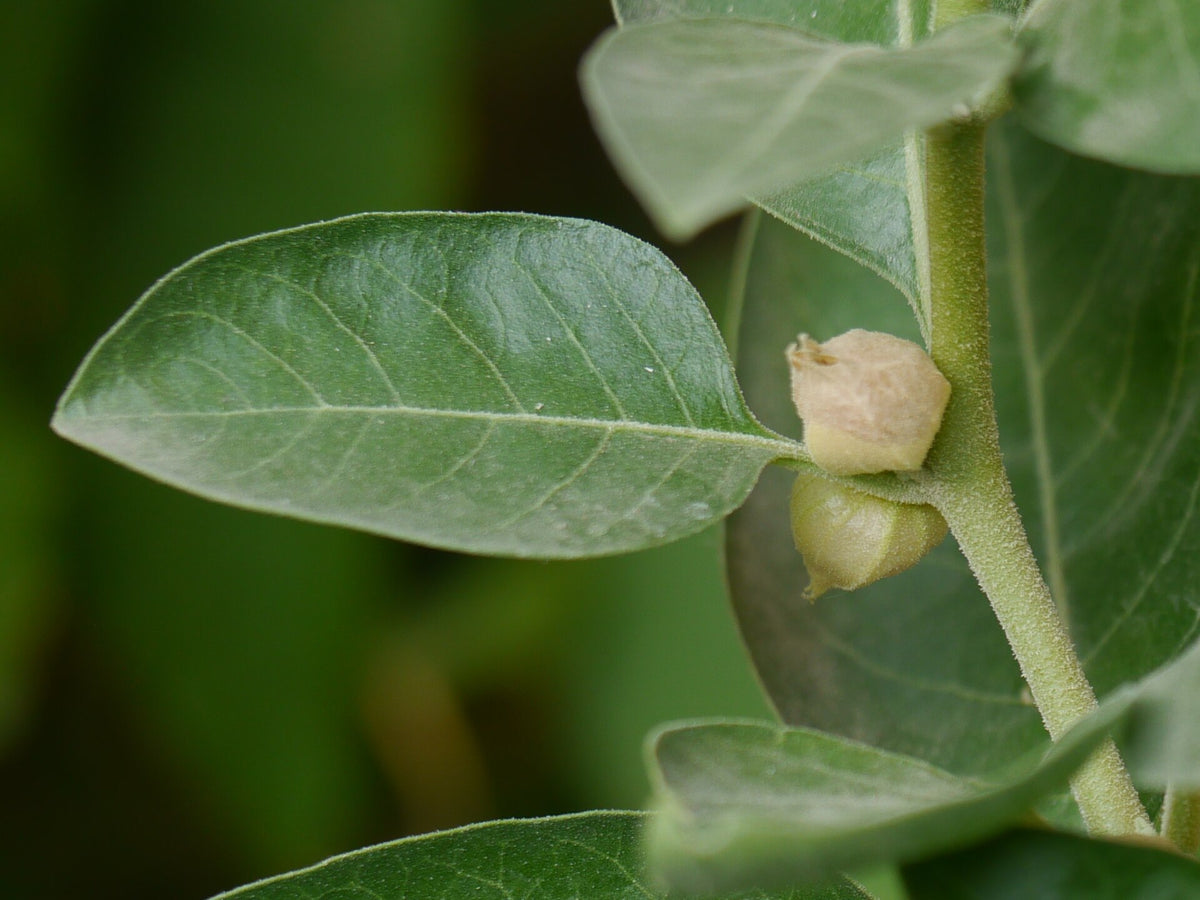
Ashwagandha (Withania somnifera) belongs to the nightshade family and grows across India, North Africa, and the Mediterranean. In Ayurveda it is classified as a rasayana, a category of herbs used for resilience and longevity. Its active compounds are withanolides, steroidal lactones that modulate the hypothalamic-pituitary-adrenal (HPA) axis and support the body's natural cortisol regulation already within a normal range.
It is one of the most thoroughly researched adaptogens in Western clinical literature. A 2012 randomized controlled trial in the Indian Journal of Psychological Medicine found that a standardized ashwagandha extract (KSM-66) helped healthy adults maintain cortisol levels already within a normal range under everyday demands. See the full study at PubMed (PMID 23439798).
The felt experience of ashwagandha is quieter than maca. Grounding in the sense of leveling rather than ramping. Women who respond well to it often describe better sleep quality, a steadier mood throughout the day, and less of that reactive, over-stimulated feeling that builds after weeks of sustained demand.
Standardized extracts tend to outperform general powders for consistency. KSM-66 and Sensoril are the two most studied forms, each measured by withanolide percentage. General bulk powders vary widely in potency between brands.
Side by Side: How Each Feels Day to Day
Here is the simplest version of the comparison:
- Maca tends to feel activating. Outward, forward, generative. Most women take it in the morning. Think of it as adding something to your baseline: energy, drive, and vitality.
- Ashwagandha tends to feel settling. Steadying. It can be taken morning or evening depending on how your body responds. Think of it as removing friction from your baseline rather than adding fuel.
Neither herb is a stimulant. Neither produces a fast, sharp effect the way caffeine does. Both work cumulatively, with most research outcomes measured at four to eight weeks of consistent use.
The "add energy" versus "reduce friction" framing turns out to be practically useful. Women who feel flat, depleted, or low-drive often respond more clearly to maca. Women who feel wired, reactive, or perpetually over-stimulated often respond more clearly to ashwagandha.
Neither is a complete solution on its own. Sleep, regular movement, and whole-food nutrition are the foundation. Adaptogens are supporting players, not substitutes.
How to Choose Based on Where You Are Right Now
Ask yourself one question: do you feel like you have too little, or too much?
Too little, meaning low energy, low motivation, flat mood, reduced drive: maca is typically the better starting point. It supports vitality and helps the body maintain energy balance already within a normal range.
Too much, meaning persistent mental tension, difficulty winding down, sleep that feels shallow, or a constant sense of reactivity: ashwagandha usually fits better. It supports the body's natural cortisol regulation already within a normal range and is strongly associated with sleep quality and mental steadiness.
A few practical notes before choosing:
- Give either herb at least four weeks before drawing conclusions. Weeks one and two often feel subtle or neutral.
- Consistency matters more than dose. A moderate daily amount taken reliably outperforms high doses taken sporadically.
- If you are managing a health condition or taking prescription medications, check with your healthcare provider before adding any botanical supplement.
Can You Take Both? Notes on Stacking
Yes. Maca and ashwagandha operate through different pathways and do not compete with each other. Many women use both simultaneously, often with maca in the morning and ashwagandha in the evening, letting each herb align with the body's natural energy rhythm.
The main reason to start with one at a time is observational: if you introduce both at once, you lose the ability to identify which one is doing what. A common approach is four weeks on one herb, then layer in the second. Once you know how each feels individually, stacking becomes much more intentional.
Dosage ranges studied in clinical trials are typically 500mg to 3g per day for standardized ashwagandha extract, and 1.5g to 3g per day for gelatinized maca powder. These are research ranges, not prescriptive recommendations. Starting at the lower end of those ranges is standard practice for new users.
Adaptogens and Intimate Wellness: The Bigger Picture
Adaptogens address one dimension of women's vitality. Intimate wellness is a full system. Circulation, mood chemistry, hormonal signaling, and energy all contribute. Addressing only one dimension often produces limited results.
This is the logic behind multi-botanical formulas. Panax ginseng, for instance, is an adaptogen distinct from both maca and ashwagandha. Its primary active compounds, called ginsenosides, appear to support nitric oxide production and circulation. Nitric oxide plays a role in blood flow throughout the body, including in sensitive tissue.
Combined with botanicals that target complementary pathways, specifically saffron (associated with serotonin and dopamine signaling), mucuna pruriens (a natural source of L-DOPA, a precursor to dopamine), L-citrulline (which the body converts to nitric oxide), and beetroot (which helps support nitric oxide levels already within a normal range), the formula addresses circulation, mood, and vitality as a unit rather than in isolation.
That is the thinking behind the MINX CUBES formula. Rather than isolating a single adaptogen, it layers Panax ginseng alongside these complementary botanicals so multiple systems are supported at once. For women who have already worked with individual adaptogens and want a more complete approach, that kind of synergy is worth exploring.
Frequently asked questions
Is maca safe for women with hormonal concerns?
Maca does not contain phytoestrogens and does not appear to bind estrogen receptors directly. Research suggests it may support the hypothalamic-pituitary axis to help maintain hormonal balance already within a normal range. Anyone managing a specific health condition or taking prescription medications should speak with their healthcare provider before adding any botanical supplement.
How long does ashwagandha take to work?
Most clinical studies measuring meaningful outcomes used 8 to 12 weeks of consistent daily use. Some women notice subtle shifts in sleep quality or mental steadiness within the first two to three weeks. The full effect tends to build gradually, which is why consistency matters more than dose.
Can maca and ashwagandha be taken at the same time?
Yes. They work through different mechanisms and do not conflict. A common approach is maca in the morning for its energizing properties and ashwagandha in the evening for its grounding qualities. If you are new to adaptogens, introducing one at a time for four weeks first helps you understand what each one does for your body specifically.
What time of day is best for each adaptogen?
Maca is most often taken in the morning or early afternoon because it tends to feel activating. Ashwagandha is commonly taken in the evening, though many women take it any time of day and find it supports calm focus rather than sedation. Both are generally taken with food to support absorption and reduce the chance of digestive sensitivity.
Are adaptogens the same as stimulants?
No. Stimulants like caffeine directly activate the nervous system in a fast, predictable way. Adaptogens support the body's own regulatory systems, typically the HPA axis, over time. The effects are subtler, more gradual, and cumulative. This is why adaptogens are generally gentler with sustained use and do not produce the energy crash that stimulants often do.
These statements have not been evaluated by the Food and Drug Administration. This product is not intended to diagnose, treat, cure, or prevent any disease.
Written by The Minx Editorial, Women's Wellness Editor.
Read more
Ashwagandha supports the stress response and helps maintain healthy cortisol. A practical beginner's guide for women, from the Minx editorial team.
Find out the best time to take wellness supplements. Morning vs evening, food pairing, and cycle-aware scheduling tips from the Minx editorial team.