
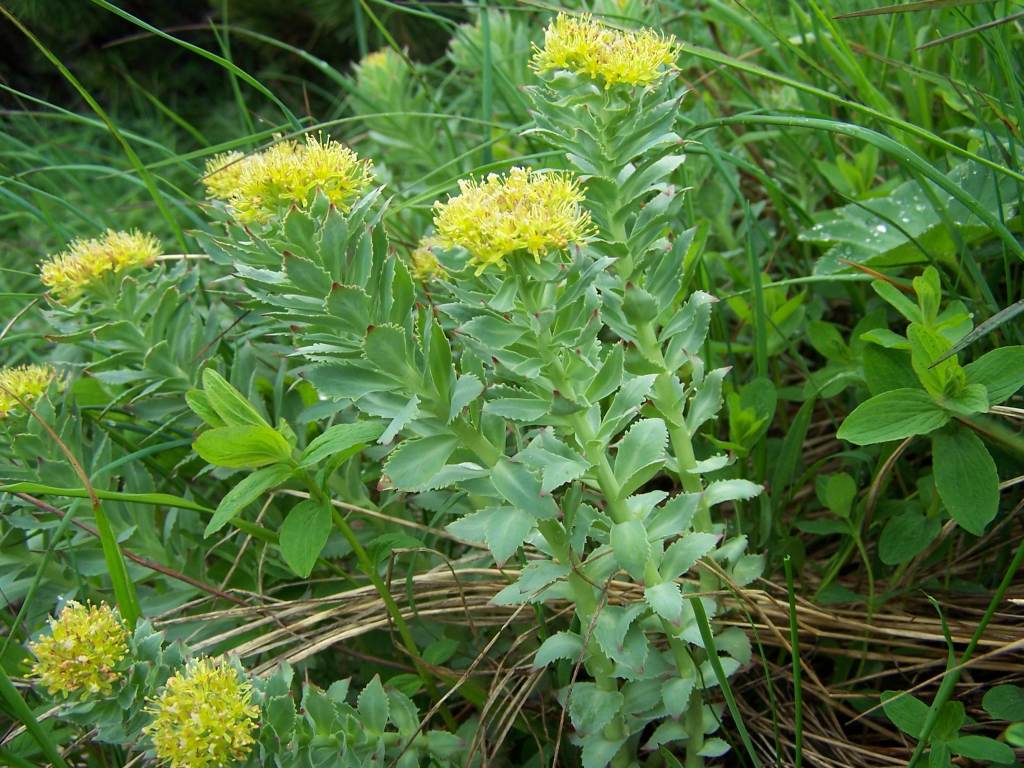
Rhodiola Rosea and Women's Mental Resilience
Rhodiola rosea is an adaptogenic herb that supports mental stamina and resilience in women dealing with sustained cognitive demands. Its active compounds, rosavins and salidroside, help the body maintain normal stress responses and support focus, mental clarity, and steady energy over time.
"Rhodiola rosea a2" by Opioła Jerzy is licensed under CC BY 2.5. To view a copy of this license, visit https://creativecommons.org/licenses/by/2.5/.
What Is Rhodiola Rosea?
Rhodiola rosea grows wild across the cold, high-altitude plateaus of Siberia, Scandinavia, and the Arctic. For centuries, traditional healers in Russia and northern Europe used its dense golden root to help people endure harsh winters and heavy physical labor. Today it belongs to a class of botanicals called adaptogens, plants studied for their ability to help the body maintain balance when external demands accumulate.
The root contains over 140 identified active compounds. Two receive the most scientific attention: rosavins and salidroside. Rosavins are found almost exclusively in rhodiola and serve as the primary standardization marker. A well-formulated extract is typically standardized to 3% rosavins and 1% salidroside. That ratio matters. Products that skip standardization may deliver wildly inconsistent amounts of these key compounds from one batch to the next, making it impossible to know what you are actually taking.
Rhodiola is classified as an adaptogen because it supports the body's capacity to respond to varied stressors rather than targeting a single isolated pathway. That broad action is what makes it relevant for women carrying heavy cognitive and emotional loads. Mental stamina demands rarely arrive in neat, separate packages.
What the Research Actually Shows
Several controlled trials have examined how rhodiola affects mental performance under sustained pressure. A double-blind study following physicians on night-shift duty, indexed on PubMed, found that those taking 170 mg of standardized rhodiola extract daily showed measurable improvements in mental work capacity, short-term memory, and calculation accuracy compared to placebo. Effects were visible within two weeks.
A second trial published in the Nordic Journal of Psychiatry examined rhodiola in individuals experiencing prolonged mental fatigue from sustained workload. Over 12 weeks, participants showed improvements in attention, cognitive function, and general vitality. No serious adverse events were recorded in either study population.
The proposed mechanism involves rhodiola's interaction with the HPA (hypothalamic-pituitary-adrenal) axis, the body's central stress-regulating system. By supporting normal cortisol regulation, rhodiola may help the body avoid prolonged cortisol spikes that can interfere with focus, memory, and emotional steadiness over time. These are structure-and-function effects that operate within the body's existing systems, not drug effects targeting any medical condition.
The active compound salidroside is also being studied for its role in supporting normal neurological function. It appears to help maintain healthy levels of monoamine neurotransmitters, the chemical messengers tied to focus and motivation, already within their normal range.
What Mental Stamina Actually Means for Women
Mental stamina is not raw intelligence. It is the capacity to stay focused, make clear decisions, and maintain emotional steadiness across a full day, especially when demands do not let up.
Women managing careers, households, relationships, and personal health simultaneously carry a specific type of cognitive load. Not a single hard task. Dozens of concurrent responsibilities, many with emotional weight attached. That persistent background hum is where mental stamina quietly erodes over weeks and months.
Rhodiola's adaptogenic properties support what researchers call non-specific resistance, a broader capacity for both body and mind to handle varied demands rather than a targeted fix for one symptom. This differs from stimulants, which borrow from tomorrow's energy to cover today's output. Adaptogens work with the body's regulatory systems, not against them.
Women in their late 20s through perimenopause often notice that their relationship with cognitive load shifts. Hormonal fluctuations can influence some of the same neurological pathways that rhodiola supports. That intersection is worth understanding, even though rhodiola itself makes no hormonal claims.
How to Use Rhodiola for Best Results
Standard dosing in clinical research ranges from 200 mg to 600 mg of standardized extract per day. Most studies use the 3% rosavins and 1% salidroside standardization as the benchmark. That concentration matters more than the raw milligram number. A lower-concentration extract at 600 mg may deliver far less salidroside than a properly standardized extract at 300 mg.
Timing is worth considering. Rhodiola is mildly activating for some people, so morning or early afternoon use tends to work better than taking it late. It does not have the sharp edge of caffeine, but it can interfere with winding down if used too close to sleep.
Some research suggests perceptible effects on mental clarity within one to two weeks of consistent daily use. Full adaptogenic support tends to build over 8 to 12 weeks. Not months before anything happens. But not an instant fix either.
Customers often ask us why we chose a chewable cube format for our formula rather than a capsule. The answer is compliance. Most people reliably eat food. Many forget a capsule. A format you actually use consistently beats a perfect product sitting in the cabinet.
Finding the right daily adaptogen supplement starts with reading the label carefully. Rosavins and salidroside percentages should both be clearly listed. If they are not, that is a meaningful gap in transparency worth noting before you buy.
Adaptogens That Pair Well with Rhodiola
Rhodiola does not need to work alone. Several other well-studied ingredients support mental stamina and cognitive function through complementary pathways:
- Ashwagandha (KSM-66 form): Complements rhodiola's cortisol-supporting properties. Tends to be calming where rhodiola is activating, a useful pairing for women who want resilience without overstimulation.
- L-theanine: An amino acid found in green tea, associated with a state of relaxed focus. Pairs well with rhodiola for sustained concentration without edge.
- B vitamins (B6 and B12): Support normal neurological function and energy metabolism. Deficiencies in B12 are common in women, particularly those following plant-based diets or over age 50.
- Magnesium glycinate: Supports normal muscle and nerve function, and mood regulation already within a normal range. The glycinate form has significantly better bioavailability than cheaper oxide forms.
The guiding principle with adaptogens is to start with one, observe, then add deliberately. Combining everything at once makes it impossible to know what is contributing. Give each addition at least two weeks before drawing any conclusions.
Choosing a Rhodiola Product Worth Taking
Not all rhodiola extracts deliver the same compounds. Sourcing region, extraction method, and standardization together determine what you are actually getting. Siberian and Scandinavian wild-harvested root is generally regarded as high quality. Cultivated sources can be consistent too, but they require closer scrutiny of extraction practices and third-party verification.
Before buying, look for:
- Standardization listed as at least 3% rosavins and 1% salidroside
- Third-party testing or a certificate of analysis available on request
- No proprietary blends that obscure individual ingredient amounts
- Clean, minimal carrier ingredients with no unnecessary fillers
Minx Cubes combine rhodiola with complementary adaptogens and cognitive-support nutrients in a daily chewable format built for real routines, not ideal ones. Consistent intake over weeks and months is where adaptogenic support builds. One cube a day. No water needed. No separate stack to coordinate.
If you are currently taking prescription medications or managing any ongoing health condition, speak with your healthcare provider before adding rhodiola or any new supplement to your routine.
Frequently asked questions
How much rhodiola rosea should I take daily?
Most clinical studies use between 200 mg and 600 mg of standardized rhodiola extract per day, standardized to 3% rosavins and 1% salidroside. Starting at the lower end and adjusting based on how you feel is a practical approach. Morning or early afternoon timing supports normal energy patterns throughout the day.
How long does it take for rhodiola to start working?
Some people notice improvements in focus and mental clarity within one to two weeks of consistent daily use. Full adaptogenic support tends to build over 8 to 12 weeks. Like most botanical supplements, rhodiola rewards consistent intake rather than occasional use.
What is the difference between rhodiola and ashwagandha?
Both are adaptogens that support the body's normal stress response, but through somewhat different pathways. Rhodiola tends to be more activating and is studied more for mental stamina and alertness. Ashwagandha is generally more calming and is often used to support relaxation and sleep quality already within normal ranges. Many women find the two complement each other well.
Can I take rhodiola rosea every day?
Clinical trials have used rhodiola daily for periods of 8 to 12 weeks with good tolerability. Some practitioners recommend cycling adaptogens with periodic breaks of one to two weeks. Continuous daily use during typical supplementation periods is well-supported in published research. If you have any concerns, a healthcare provider can give guidance specific to your situation.
Is rhodiola safe to combine with other supplements?
Rhodiola is generally well-tolerated alongside most common supplements. It is mildly activating, so pairing it with large amounts of caffeine or other stimulating compounds may not suit everyone. If you take prescription medications, speak with your healthcare provider before adding rhodiola to your routine.
These statements have not been evaluated by the Food and Drug Administration. This product is not intended to diagnose, treat, cure, or prevent any disease.
Written by The Minx Editorial, Women's Wellness Editor.
Read more
Chronic stress does more than exhaust you. Learn how cortisol affects female desire and what supports your hormone balance and libido naturally.
Fenugreek isn't just a men's herb. Learn 5 things every woman should know about fenugreek, hormonal balance, libido support, and finding the right formula.