
Tribulus Terrestris for Men: Hype or Legit Herb?
Tribulus terrestris is a flowering plant with centuries of use in traditional herbalism for male vitality. Research suggests it may help support testosterone levels and libido already within a normal range, though results vary by population, dosage, and extract quality.
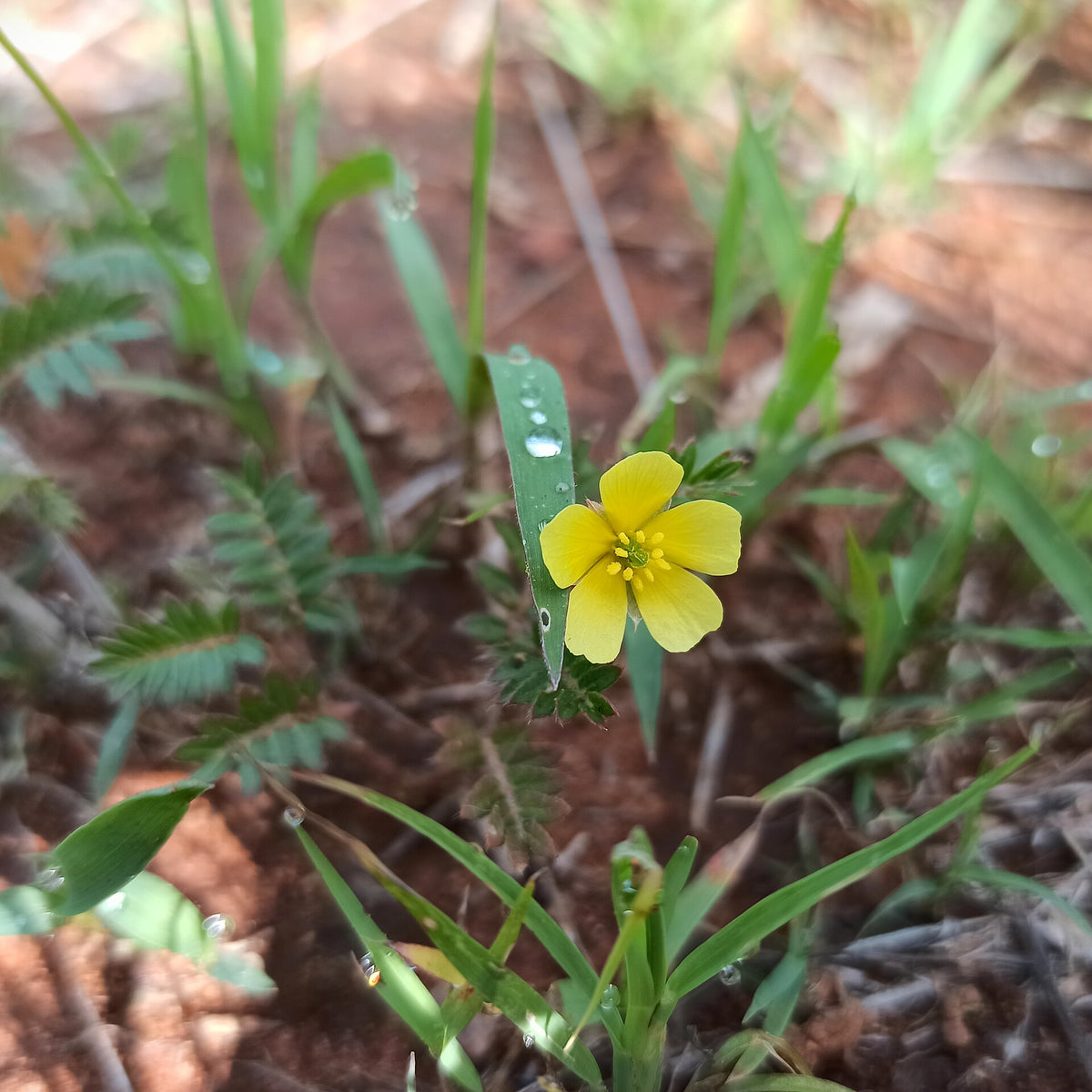
Juan Carlos Fonseca Mata / CC BY-SA 4.0 / via Wikimedia Commons
What Is Tribulus Terrestris?
Tribulus terrestris is a small flowering plant with a big reputation. It grows across southern Europe, parts of Asia, Africa, and Australia. Common names include puncture vine and goat's head. The spiky seed pods are memorable, and painful underfoot. The active compounds, however, live primarily in the plant's aerial parts and roots.
Those compounds are steroidal saponins, with protodioscin being the most studied. Saponins are naturally occurring chemicals found in many plants, but tribulus concentrates them at unusually high levels under the right growing conditions. A product standardized to 40% saponins or higher will behave very differently from raw powdered herb with no quality controls listed on the label. This is not a small difference. It is the difference between a studied dose and a guess.
Ayurvedic medicine and Traditional Chinese Medicine both have long records of using tribulus to support male vitality, energy, and reproductive wellness. Modern supplementation is built on that traditional foundation, now filtered through clinical research to understand what the active fractions actually do, and for which populations they do it most reliably.
What the Research Actually Shows
The honest answer: mixed. That is not a reason to dismiss the herb, but understanding exactly what the evidence supports, and where it gets thinner, is worth the two minutes it takes.
Animal studies, particularly in rodents with low baseline hormone levels, consistently show significant increases in testosterone and luteinizing hormone (LH). The picture in healthy human males is more nuanced. A well-known 2005 study published in the Journal of Ethnopharmacology found no significant change in androgen levels in young, healthy men taking 10 mg per kilogram of body weight daily for 20 days. That full study is available on PubMed. The population matters enormously here, and that particular study population was already healthy and young.
Where the research is more consistent: men with testosterone levels at the lower end of the normal range, or older men experiencing natural age-related hormonal shifts, tend to show more measurable responses. Several controlled trials found improvements in libido and sexual satisfaction scores compared to placebo groups, particularly in a 2016 pilot study focused on men with partial androgen deficiency. These were not dramatic effects. They were modest, consistent across multiple studies, and statistically meaningful in the populations studied.
Tribulus is not a shortcut to dramatically higher testosterone in already-healthy young men. For men who want to support testosterone levels already within a normal, healthy range, the evidence is more promising than the skeptics admit, but more modest than the marketing often implies. Both of those things can be true.
The Luteinizing Hormone Connection
To understand how tribulus might support testosterone levels already in a healthy range, a brief look at how the body produces testosterone is useful.
The hypothalamus signals the pituitary gland, which releases luteinizing hormone. LH then signals the testes to produce testosterone. Some researchers believe that tribulus saponins may support healthy LH signaling, which in turn promotes the body's own natural testosterone production process. The proposed mechanism involves agonist-like activity on LH receptors, though this is still an area of active investigation.
This is a support role. Not a replacement. The body's hormonal system is self-regulating, and supporting one signal in an already-efficient system does not always produce a measurable downstream change, especially in younger men whose systems are running well. The effect is most plausible in men where that signaling pathway has some variability or room to work with. Age tends to create that room. Chronic stress, poor sleep, and nutritional deficits can contribute too.
None of this means tribulus is inert in healthy men. It may mean the benefits operate below the detection threshold of short-term studies, or that the improvements are more qualitative than measurable by bloodwork alone. Both of those scenarios have precedent in botanical research.
Athletic Performance and Physical Vitality
Customers often ask us whether tribulus helps with strength, muscle building, or training recovery. It is one of the most consistent questions we hear, and it deserves a straight answer.
A frequently cited trial from Sofia's Medical University followed elite male athletes taking tribulus extract over several weeks. Strength and muscle mass gains were comparable between the tribulus group and the placebo group. No meaningful athletic advantage in that population. Worth knowing.
Smaller studies and observational data suggest something subtler may happen in recreational athletes who are not already at peak competitive conditioning. Some physically active men report better subjective energy levels and faster perceived recovery. There is early-stage research on tribulus's potential role in supporting healthy nitric oxide pathways, which would have relevance for circulation during training. That research is not yet mature enough to stand as established fact, so supports it as interesting rather than confirmed.
What the athletic evidence does not support: tribulus replacing training, sleep, nutrition, or adequate protein intake. As a complement to a solid foundation, some men find it a worthwhile addition to a support stack. As a substitute for the basics, it will disappoint. No herb fixes a poor training program or a three-hour sleep schedule.
Dosage, Forms, and What to Look For on Labels
Most clinical trials use doses between 250 mg and 1,500 mg per day, divided across two or three servings. The range most consistently cited in studies showing positive effects on libido sits around 750 mg to 1,000 mg daily of a standardized extract.
The word "standardized" is the one to find on any label. A product specifying 40% saponins by dry weight is telling you something meaningful about what you are actually getting per serving. A product listing "tribulus extract 500 mg" with no standardization percentage is telling you very little.
Common forms include:
- Capsules: consistent dosing, easy to pair with other daily supplements, and the format used in most clinical research
- Tablets: similar convenience, though binders can sometimes affect absorption rates
- Liquid extracts: theoretically faster absorption, but standardization is harder to verify on labels
- Whole herb powder: lowest cost, and typically the least reliable due to inconsistent and often low saponin content
Duration matters as much as dose. Most trials run 60 to 90 days before measuring outcomes. A few weeks of use rarely tells you much. Consistent daily use over several months gives the herb a fair test, and gives your body time to show you what it actually responds to.
Who Might Consider Adding It
Tribulus is not a universal recommendation. Being clear about who tends to see the most from it is more useful than a broad sell.
Men who tend to find it most relevant:
- Men in their 30s and beyond looking to support testosterone levels already within a healthy, normal range
- Physically active men wanting to complement a solid training and nutrition foundation with an herbal support layer
- Men interested in maintaining healthy libido as natural hormonal patterns shift with age
- Anyone already prioritizing quality sleep, resistance training, and adequate protein who wants to add an evidence-adjacent botanical
Men who will likely see little from it: healthy men in their early 20s with testosterone already at high-normal levels. The research is weakest in this group. Supplement spending is better directed toward areas where the evidence is stronger at that life stage.
Tribulus is not a hormone replacement strategy. It does not introduce testosterone into the body from an external source. What it may do, based on the available research, is help support the body's own production mechanisms through natural internal signaling pathways. That distinction matters, both for safety and for setting realistic expectations.
How Tribulus Fits Into a Daily Routine
Choosing a tribulus product is mostly a quality conversation. The herb is widely available, but the majority of products on the market either under-dose it or skip meaningful standardization entirely. An unstandardized, cheap capsule is not the same product that was used in clinical trials, regardless of what the front label says.
The Minx Man Cubes daily blend puts tribulus at a meaningful standardized dose alongside other botanicals selected for their complementary roles in male wellness. The cube format makes daily use simple. No capsule counting. No measuring powder. In our formula, saponin percentage was a non-negotiable spec during development, not an afterthought.
Consistency is what separates a real test from wishful thinking. A well-formulated product taken daily for 60 to 90 days is a fair trial. A bottle used halfway and abandoned tells you nothing about whether an ingredient works for you. supports it like any other wellness habit: give it time, keep the rest of your routine consistent, and you will actually know what you are working with.
Frequently asked questions
Does tribulus terrestris actually raise testosterone?
In healthy young men with testosterone already in the normal range, the evidence is weak. In men with levels at the lower end of the normal range, particularly older men, several controlled studies found tribulus helped support testosterone levels already within a healthy range. The effect is real but modest, and population-dependent.
How long does it take to notice effects from tribulus?
Most clinical studies run 60 to 90 days before measuring outcomes. Expecting noticeable results in two weeks is likely unrealistic. For libido and energy, some men report changes within four to six weeks of consistent daily use at an appropriate standardized dose.
Is tribulus terrestris safe to take every day?
Tribulus has a well-established safety profile at studied doses in healthy adults. Most clinical trials lasting up to 90 days report no significant adverse effects. Starting at a moderate dose and maintaining consistency is a sensible approach. If you take medications or have specific health concerns, speak with a healthcare professional before starting any new supplement.
Can tribulus help support healthy libido?
Libido support is the area where tribulus research is most consistent. Multiple controlled trials found improvements in sexual desire and satisfaction scores in men taking tribulus extract compared to placebo, particularly in studies running 60 days or longer. The effect appears most reliable in men at the lower end of the normal libido range.
What should I look for in a tribulus supplement?
Standardized saponin content is the key quality marker. Look for a product specifying at least 40% saponins by dry weight. A daily dose in the 750 mg to 1,000 mg range matches most of the positive human research. Avoid products that list only 'tribulus extract' with no saponin percentage, as these offer no designed of active content.
These statements have not been evaluated by the Food and Drug Administration. This product is not intended to diagnose, treat, cure, or prevent any disease.
Written by The Minx Editorial, Women's Wellness Editor.
Read more
Chronic stress reshapes cortisol's daily rhythm and disrupts downstream hormones. Learn how the HPA axis affects women's energy and desire, and find support.
Low drive, slow recovery, brain fog? Everyday signals in men may point to suboptimal zinc status. Learn what to look for and how zinc supports your body.