
Tribulus Terrestris: A Women's Guide to This Herb
Tribulus terrestris is a spiny plant used in Ayurvedic and traditional Chinese medicine for centuries. Women use it to support libido, promote steady energy, and help maintain hormone levels already within a normal range. Effects build gradually over four to eight weeks of consistent daily use.
What Tribulus Terrestris Actually Is
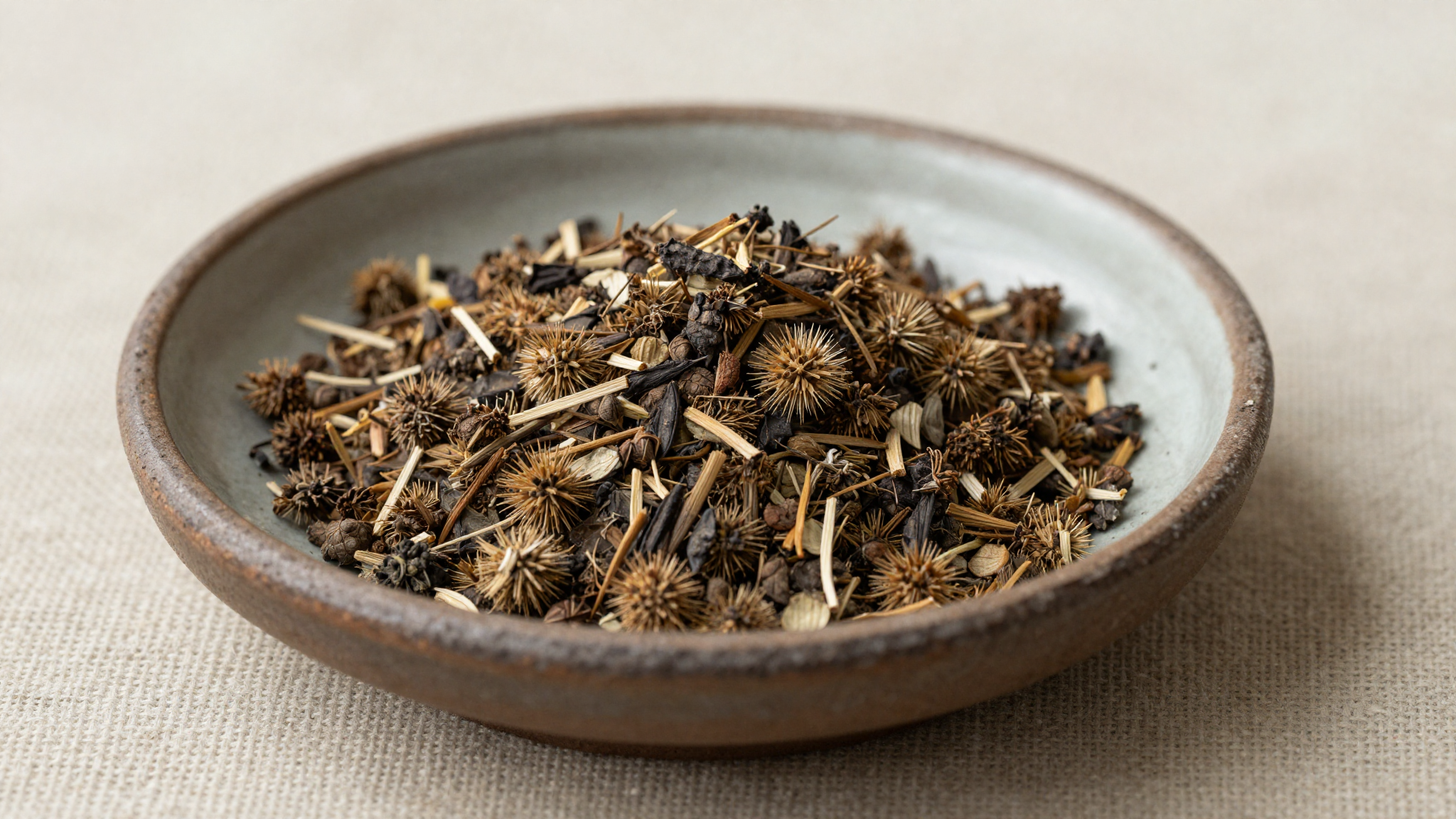
Tribulus terrestris is a low-growing, flowering plant native to warm climates across southern Europe, the Mediterranean, Asia, Africa, and Australia. It thrives in dry, sandy, even saline soils where most vegetation gives up. That resilience has made it one of the most widely distributed plants on earth.
The fruit is covered in sharp spines, which explains folk names like puncture vine, cat's head, and goat's head. The fruit is not the part that matters for wellness. Herbalists and traditional practitioners have long worked with the root and aerial parts: stems, leaves, and flowers.
In Ayurvedic medicine, tribulus appears under the Sanskrit name Gokshura, which translates roughly to "cow's hoof." Gokshura belongs to the Ashtavarga group, a collection of plants considered particularly supportive of reproductive and urinary wellness. Practitioners prescribed it to both men and women, though the women's applications have received less modern research attention until recently.
Traditional Chinese medicine classifies the plant as ci ji li and uses it to support liver function and what practitioners describe as calming internal wind. The overlap with Ayurvedic applications is notable: both traditions reach for this plant in contexts related to vitality and reproductive wellness.
The compounds driving contemporary research are steroidal saponins, particularly furostanol saponins like protodioscin. Standardized extracts are labeled by saponin content, typically 40% to 90%. That percentage matters far more than the raw milligram figure on the front of any label.
Why Women Are Paying Attention to It
Tribulus got its Western supplement market introduction in the early 1990s when Eastern European athletes and coaches brought it to American audiences. The marketing that followed was almost entirely male-focused: testosterone, muscle, performance. That framing stuck.
The women's story is quieter but considerably older. Gokshura appears in Ayurvedic texts written long before modern supplement marketing existed, prescribed for menstrual irregularity support, urinary tract wellness, and reproductive vitality in women. Tribulus has never been exclusively male territory. Western marketing made it seem that way.
Customers often ask us whether this plant has any real application for women specifically. The short answer: yes, particularly for libido support, sustained energy, and helping maintain hormone levels already within a normal range during times of natural hormonal change.
Women produce testosterone in the ovaries and adrenal glands, though in much smaller amounts than men. Testosterone plays a role in female desire, energy, and mood that rarely gets enough attention in mainstream wellness discussions. Research on tribulus in women often focuses on this pathway. The plant's saponins appear to interact with androgen receptors, which are involved in female sexual response alongside estrogen pathways.
How any of this plays out varies considerably. Baseline hormone levels, age, stress load, sleep quality, and overall health all influence whether a botanical like tribulus produces a noticeable effect in a given person.
The Active Compounds and How They Work
Protodioscin is the furostanol saponin that researchers follow most closely. Once absorbed, it may convert to dehydroepiandrosterone (DHEA) through enzymatic processes in the body. DHEA is a precursor involved in producing both estrogen and testosterone. Providing that precursor, rather than the hormones directly, is what distinguishes tribulus from direct hormone supplementation.
This distinction matters for two reasons. First, the body retains more control over what gets produced and in what quantity. Second, effects are gentler and more gradual than pharmaceutical interventions. Botanical effects are not switches. They are dials that move slowly over weeks of consistent use.
Other saponins present in tribulus, including dioscin and diosgenin, have been studied for interactions with nitric oxide pathways, which are relevant to circulation and arousal. Some research also looks at how these compounds interact with neurotransmitter systems involved in mood and motivation, which may explain why energy and mood sometimes improve before libido-specific effects become noticeable.
Standardization is non-negotiable if results matter to you. A bulk powder with no saponin percentage on the label will have inconsistent active compound content from batch to batch. An extract standardized to 60% saponins delivers a predictable dose of the compounds that research actually studied. Look for the percentage on the label, not just the word "extract" without qualification.
What the Research Finds for Women
Honest context first: the human clinical research on tribulus specifically in women is smaller than the body of work on some other botanicals. Most studies involve fewer than 100 participants, and independent replication is still building. That is not a reason to dismiss the plant. It is context for calibrating expectations.
The most referenced trial tested a standardized tribulus extract (750 mg daily of a saponin-standardized preparation) in premenopausal women reporting low desire. Over four weeks, participants taking tribulus showed statistically significant improvements in desire, arousal, lubrication, and overall satisfaction scores compared to placebo. Effect sizes were modest but consistent across all measured domains.
A separate study examined women experiencing sexual dysfunction as a side effect of antidepressant medication. Tribulus supplementation over four weeks supported sexual function scores significantly more than placebo in that group. PubMed indexes several studies on this application for anyone who wants to review the methodology directly.
Research on whether tribulus meaningfully shifts hormone levels in healthy women with markers already within a normal range shows mixed results. Most studies do not find large hormonal changes. The functional effects on desire and energy appear to involve multiple mechanisms beyond testosterone alone, including effects on nitric oxide production and possibly central dopamine signaling, which helps explain why results are not perfectly predicted by baseline hormone levels.
How to Use Tribulus Day to Day
Consistency is the single most important variable. Taking tribulus three times one week and skipping the next two produces nothing useful. Daily use for a minimum of four weeks is the baseline. Most studies used six to twelve weeks of continuous supplementation before drawing conclusions.
Dose ranges in research run widely, from 250 mg to 1500 mg of standardized extract per day. For women, the doses that showed effects in the strongest human studies fall in the 500 to 750 mg range, using extracts standardized to at least 40% saponins. Splitting the dose between morning and evening is one approach; a single daily dose is also consistent with how many studies have been designed.
Take tribulus with food. Some people experience mild digestive discomfort on an empty stomach. Not common, but the food buffer eliminates most of it. If you take hormonal medications, oral contraceptives, or any prescription that affects androgen or estrogen levels, review tribulus with your healthcare provider before starting.
Do not assess it in the first two weeks. The earliest effects most women notice are subtle energy improvements or marginally better sleep, not libido changes. Those tend to come later, if they come at all.
How Tribulus Fits with Other Botanicals
In our formula, tribulus does not work in isolation. Women's vitality, desire, and energy are downstream of multiple systems: hormonal, neurological, circulatory, and stress-response. A formula addressing only one pathway has a narrower window of effect than one addressing several in parallel.
Maca root (Lepidium meyenii) is one of tribulus's most studied botanical companions. This Peruvian root has a distinct mechanism, supporting libido and energy through pathways that do not appear to depend on direct hormone changes. Several controlled trials support maca's role in promoting healthy sexual function in women independent of estrogen or testosterone levels. Multiple PubMed-indexed studies cover this area. Combining maca with tribulus means addressing two distinct biological pathways simultaneously rather than doubling down on one.
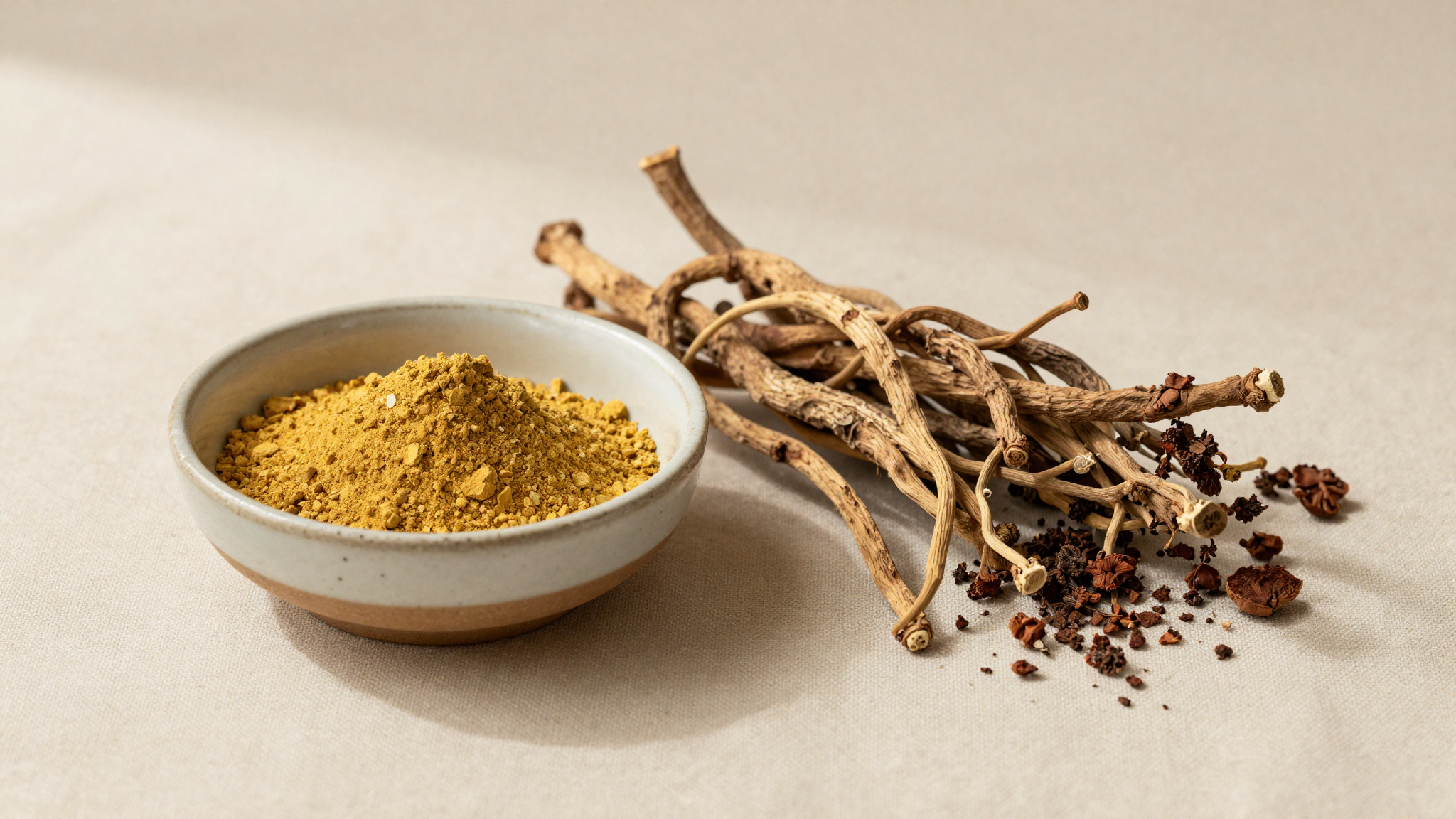
Ashwagandha (Withania somnifera) brings stress-response support. Chronic stress suppresses libido in women consistently and measurably. Cortisol competes with sex hormones for the same precursor molecules. An adaptogen that helps maintain healthy cortisol levels already within a normal range can free up those building blocks for other functions in the body.
Fenugreek seeds contain their own steroidal saponins, including diosgenin, with overlapping properties to tribulus compounds. Some women find fenugreek a useful complement for supporting healthy hormonal balance already within a normal range alongside tribulus.
If you are looking for the right tribulus supplement for women, prioritize formulas transparent about individual ingredient doses over proprietary blends that list only a combined total weight. That transparency is the only way to know what you are actually comparing.
What to Expect Week by Week
Week one: nothing dramatic. Some women notice marginally better sleep or a slightly higher afternoon energy floor. Most notice nothing at all. This is entirely normal and not a sign the formula is not working.
Weeks two and three: energy is often where the first recognizable effects show up. Not a spike. More like the floor lifting a little rather than a ceiling pushing up. Some women also notice improved motivation or a slightly more consistent mood during this window.
Week four and beyond: this is when libido-related effects tend to surface for women who respond well. More genuine interest. Higher sensitivity. Better satisfaction overall. These effects are real in the clinical studies but subtle in lived experience. Botanicals work with the body rather than overriding it. That subtlety is a feature of the category, not a limitation of the plant.
Longer-term use, beyond twelve weeks, is where some women notice secondary effects like improved skin hydration or hair strength. These may relate to the DHEA precursor pathway. They are variable and not designed outcomes.
Tribulus is not a substitute for the foundations. Good sleep, consistent movement, adequate nutrition, and managed stress create the conditions in which a botanical like this has room to do something useful. The supplement supports what is already there.
Frequently asked questions
Is tribulus terrestris safe for women to take daily?
Tribulus has a long traditional use history and has been evaluated in short-term clinical studies without significant adverse events in healthy women. Most research runs four to twelve weeks of daily use without safety signals. If you take hormonal medications, contraceptives, or other prescription drugs, speak with a healthcare provider before adding tribulus to your routine.
How long does tribulus take to work for women?
Most women who respond to tribulus notice something subtle around weeks three to four of consistent daily use. Energy effects often appear before libido-related ones. Give it six to eight weeks before forming an honest opinion about whether it works for you personally.
What saponin percentage should I look for in tribulus?
Research studies typically use extracts standardized to 40% to 90% saponins. Look for that specific percentage on the label. A product listing tribulus extract without a saponin percentage may have inconsistent active compound content from batch to batch, making it impossible to know what dose you are actually getting.
Can tribulus support hormonal balance in women?
Tribulus may support healthy hormone levels already within a normal range, partly through the protodioscin-to-DHEA conversion pathway. It is not a hormone replacement and does not dramatically shift levels in healthy people. It works best as part of a broader daily wellness routine rather than as a standalone intervention.
Does tribulus affect testosterone levels in women?
Women naturally produce testosterone, and it plays a role in desire, energy, and mood. Tribulus may help maintain healthy testosterone levels already within a normal range. Most human studies do not find large hormonal shifts in healthy women; functional effects on desire appear to involve multiple pathways, not testosterone changes alone.
These statements have not been evaluated by the Food and Drug Administration. This product is not intended to diagnose, treat, cure, or prevent any disease.
Written by The Minx Editorial, Women's Wellness Editor.
Read more
Ashwagandha supports cortisol balance and mood in women. Learn how this adaptogen works with female physiology, and try our KSM-66 formula today.
Zinc supports hormonal signaling, skin health, and feminine vitality. Learn the signs of low intake and how to choose the best form. Explore Minx Cubes.