What Maca Root Actually Does in Your Body
Maca root is a cruciferous vegetable native to the Peruvian Andes. Classified as an adaptogen, it supports the body's own regulatory systems, particularly the hypothalamic-pituitary axis, to help maintain hormonal balance and steady energy over time. It contains no hormones itself. Effects typically become noticeable after two to four weeks of consistent use.
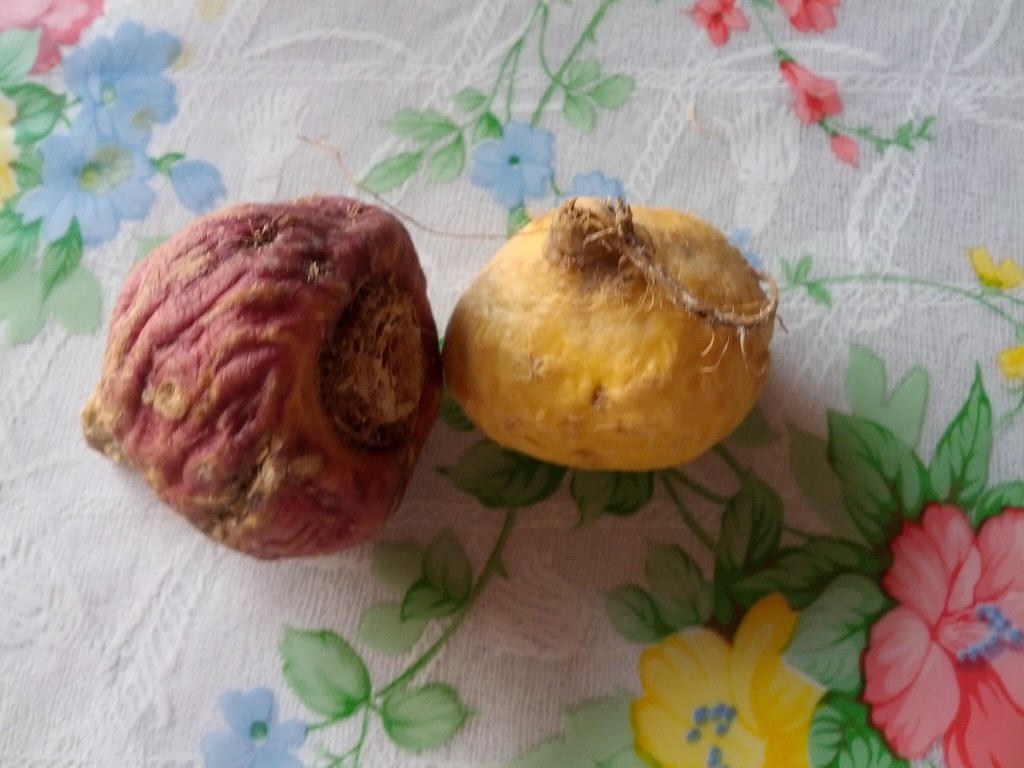
"Maca root" by tacowitte is licensed under CC BY 2.0. To view a copy of this license, visit https://creativecommons.org/licenses/by/2.0/.
What Is Maca Root, Really?
Maca root isn't a herb in the traditional sense. It's a vegetable. A cruciferous root in the same botanical family as broccoli, kale, and radishes, with the scientific name Lepidium meyenii. It grows almost nowhere else on earth except the Peruvian Andes, at elevations between 13,000 and 16,000 feet above sea level.
At that altitude, conditions are brutal. Freezing nights, intense UV radiation, thin air, and temperature swings that would kill most cultivated crops. Plants don't survive those conditions by accident. Maca has adapted over thousands of years to thrive under constant environmental pressure, and that survival chemistry is part of what makes it interesting to researchers today.
The root has been cultivated in Peru for at least 2,000 years. Indigenous Andean communities used it as a food staple and traded it as currency. Spanish colonizers documented it in the 1600s as a root their livestock consumed to improve fertility at high altitude. Today it's available worldwide as a powder, capsule, or liquid extract.
Smaller than a radish. Cream to deep purple in color depending on the variety. A mild, slightly nutty flavor when dried and powdered. Unremarkable to look at, which makes its phytochemical complexity all the more surprising.
The Adaptogen Concept: Why It Matters
Most people reach for a supplement expecting a direct action: take iron, raise iron levels. Maca doesn't work that way. It belongs to a category of botanicals called adaptogens, plants that support the body's own capacity to maintain balance rather than pushing one physiological direction.
The concept traces back to Soviet pharmacologist Nikolai Lazarev, who in the 1940s described adaptogens as substances that help organisms resist physical, chemical, and biological stressors without disrupting normal function. The key phrase is "without disrupting." A true adaptogen doesn't suppress cortisol on a Tuesday when it's already appropriate. It supports the regulatory systems that keep cortisol proportional to what the body actually needs.
For maca specifically, researchers believe the active mechanism runs through two major signaling highways: the hypothalamic-pituitary-adrenal axis (HPA) and the hypothalamic-pituitary-gonadal axis (HPG). These pathways link your brain to your endocrine system. Maca contains unique compounds called glucosinolates and macamides. Macamides, found only in maca root, appear to modulate neurotransmitter pathways and support healthy signaling along both axes.
Critically: maca does not contain any hormones. It does not mimic estrogen or testosterone. The working theory is that it supports upstream communication that helps keep hormone production already within a normal range, rather than introducing hormones directly. That distinction matters a lot.
Maca and Hormonal Balance: What the Studies Show
Hormonal balance isn't a single number you hit. It's a dynamic state, the result of constant signaling between the brain, adrenal glands, and reproductive organs. A lot can nudge it off course: sustained stress, disrupted sleep, poor nutrition, over-training.
Research on maca and hormonal balance is still building, but some patterns have emerged. A double-blind trial published in Menopause found that postmenopausal women taking maca extract reported meaningful improvements in self-assessed well-being without measurable changes in serum estrogen or FSH levels. That finding is significant. The women felt different, but their hormone blood levels didn't shift, suggesting maca may influence how the body responds to its existing hormones rather than changing their concentrations.
For women navigating the hormonal fluctuations of perimenopause, maca appears to support the maintenance of mood and energy already within a normal range. Several follow-up trials echo this, using careful language like "promotes" and "may help maintain" rather than the stronger terms reserved for pharmaceutical research.
For women in their 20s and 30s, the primary appeal tends to be maca's support for stable energy and normal mood during stretches of sustained stress. Chronic stress elevates cortisol. Chronically elevated cortisol affects the HPG axis, which governs cycles and libido signaling. Maca supports the feedback loop upstream, at the source.
Maca and Energy: Not Just Caffeine Adjacent
Customers often ask us why maca is grouped with energy-supporting supplements when it contains zero caffeine. Fair question. The mechanism is completely different.
Caffeine works by blocking adenosine receptors, preventing the brain from registering fatigue signals. It's a mask, not a repair. The lift is fast. The crash is predictable.
Maca's effect on energy appears to run through a separate channel entirely. Macamides may support endocannabinoid signaling, which plays a role in regulating perceived energy, motivation, and physical endurance. A small but frequently cited trial in trained cyclists found that those taking 14 grams of maca daily for two weeks improved their 40-kilometer time trial performance compared to their own baseline. The study was limited (eight cyclists, short duration), so it isn't definitive. The directional signal was still consistent.
What people consistently describe, and what the adaptogen framework would predict, is not a spike followed by a drop. It's more like a floor being raised. Steady support for the kind of energy that carries you through a full afternoon without the wall. Most people need two to four weeks of consistent daily use before they register the shift, partly because they're noticing the absence of their usual fatigue rather than a new sensation of alertness.
That's a meaningful difference in how you experience the day. Quieter than caffeine. More durable.
Red, Yellow, and Black Maca Are Not the Same
Maca comes in several color varieties, each with a somewhat different phytochemical profile. Most consumers don't know this distinction exists, and it's worth understanding before you buy.
Yellow maca is the most common and the most researched. It accounts for roughly 60% of commercial production in Peru, and most clinical trials have used yellow maca or a blend that includes it. A solid starting point for anyone new to the root.
Red maca contains higher concentrations of certain glucosinolates. Animal model research has pointed to red maca in the context of bone density support. Among practitioners working with women's hormonal health, red is often noted as the variety most closely associated with mood support, though large-scale clinical trials isolating red maca specifically are still limited.
Black maca has the highest macamide concentration of the three. It has been most studied in relation to memory, cognitive focus, and physical endurance. Traditional Peruvian communities considered it the most potent variety and reserved it for periods of high physical or mental demand.
Many commercial formulas blend all three to capture the full phytochemical range. When choosing a maca product, look for gelatinized powder rather than raw. The gelatinization process heats the root briefly to remove most of the starch, which improves digestibility and bioavailability without meaningfully reducing the macamide content.
Reading the Research Without Overselling It
Maca's research base is real but modest. Meaningful human trials exist, but most are small (fewer than 50 participants), short (four to twelve weeks), and conducted by independent institutions rather than supplement companies, which is actually a positive sign for objectivity.
A 2010 systematic review in Maturitas examined four randomized controlled trials and found evidence that maca may support sexual well-being and mood in postmenopausal women. The authors concluded that larger trials are still needed before firm claims can be made. That is the honest summary: promising early data, plausible mechanisms, a strong traditional safety record spanning centuries, and an ongoing need for more rigorous human research.
What the existing body of work supports: energy levels already within a normal range. Mood stability already within a normal range. Hormonal balance already within a normal range. These are structure-and-function observations, not medical claims, and they are the appropriate frame for a botanical that has served as a food source for over two thousand years. Anyone promising more than that is getting ahead of the science.
How Maca Fits Into a Broader Botanical Routine
No single botanical does everything. Maca is one piece of a larger picture that may include other adaptogens, circulation-supporting ingredients, and consistent lifestyle practices. The whole matters more than any one root.
The growing interest in plant-based intimate wellness formulas among women is exactly the space that the team at Minx has been working in, building products that pair well-researched botanicals in thoughtful combinations. The MINX CUBES blend, for example, brings together Panax ginseng (a well-studied adaptogen with its own deep research history), saffron (long associated in traditional use with mood and desire), L-citrulline (which supports healthy blood flow through its role in nitric oxide production), and mucuna (a botanical associated with dopamine pathway support). The philosophy runs parallel to maca's: work with the body's own regulatory systems rather than overriding them.
If you're new to adaptogens, maca is a reasonable entry point. A typical starting dose is 1.5 to 3 grams of gelatinized powder daily, roughly half a teaspoon. Give it three to four weeks. Pay attention to the small signals: whether a full Tuesday afternoon feels different, whether you're sleeping more soundly, whether the low-level irritability of a hard week has quietly leveled out.
That's what a well-matched adaptogen feels like. Not a lift. A steadying.
Frequently asked questions
How long does maca take to work?
Most people notice a difference after two to four weeks of consistent daily use. Adaptogens work gradually on regulatory systems rather than producing an immediate spike, so the effect often shows up as the absence of your usual fatigue or midday irritability rather than a new sensation. Tracking simple markers like energy and sleep quality makes the gradual shift easier to notice.
Does maca contain hormones?
No. Maca contains no estrogen, progesterone, or testosterone, and it is not a phytoestrogen like soy isoflavones. Researchers believe it supports hormonal balance already within a normal range through indirect effects on the hypothalamic-pituitary axis, the brain-endocrine communication pathway, rather than by introducing hormones into the body directly.
What is the difference between raw maca powder and gelatinized maca?
Raw maca retains all its original compounds but can cause digestive discomfort in some people due to its intact starch content. Gelatinized maca has been briefly heated to remove most of the starch, improving both digestibility and bioavailability without significantly reducing the macamide content that makes maca effective. Gelatinized powder is generally the better choice for consistent daily use.
Can I take maca alongside other adaptogens?
Generally, yes. Adaptogens like maca, Panax ginseng, and rhodiola work through somewhat different mechanisms and are frequently combined in botanical wellness formulas. Starting with one adaptogen at a time is helpful if you want to understand what each one is doing for your body before adding another to the mix.
Is one color of maca better than the others?
It depends on the goal. Yellow maca is the most studied and the most available. Red maca has been associated in research with mood and hormonal balance support, particularly for women. Black maca has the highest macamide content and has been linked to energy and cognitive support. Many quality formulas blend all three to capture the full phytochemical range rather than betting on a single variety.
These statements have not been evaluated by the Food and Drug Administration. This product is not intended to diagnose, treat, cure, or prevent any disease.
Written by The Minx Editorial, Women's Wellness Editor.