
What Maca Root Actually Does for Women's Energy
Maca root supports energy and stamina by influencing the body's stress-response system rather than directly altering hormone levels. Research suggests it helps promote vitality and supports healthy desire in women, with most people noticing a meaningful shift after four to six weeks of consistent use.
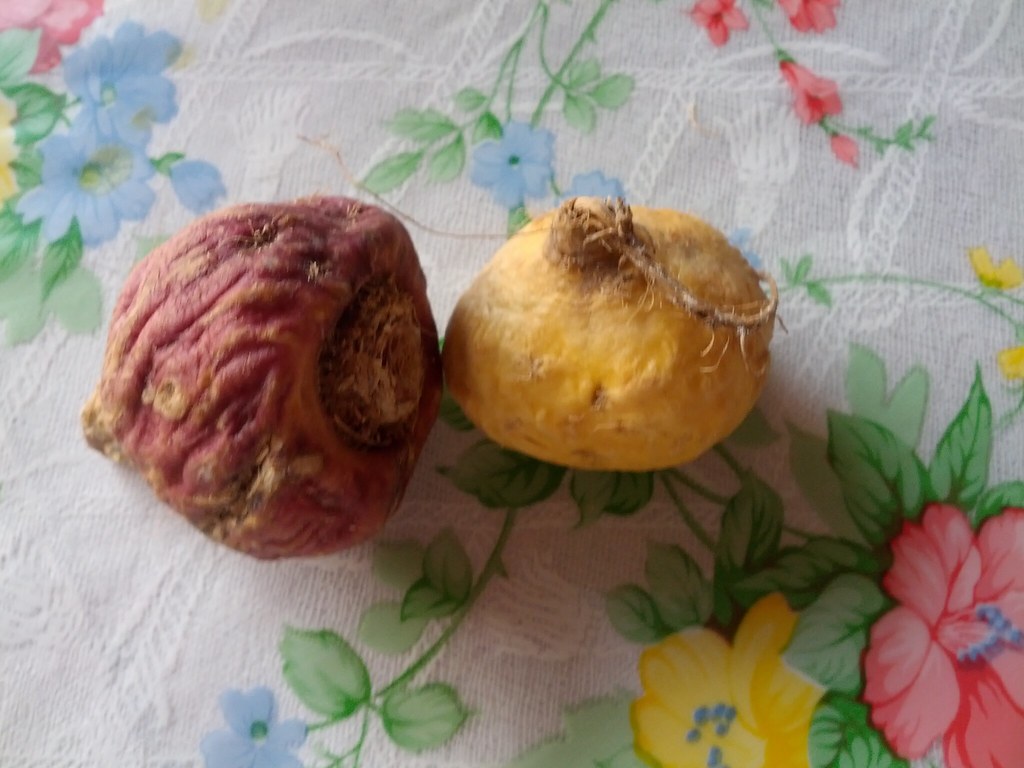
"Maca root" by tacowitte is licensed under CC BY 2.0. To view a copy of this license, visit https://creativecommons.org/licenses/by/2.0/.
What Maca Root Actually Is
Maca is a root vegetable, not an herb. That distinction matters. It grows in the Peruvian Andes at altitudes above 13,000 feet, where thin air, intense UV radiation, and dramatic temperature swings shape a plant that is genuinely resilient. The Incas valued it for endurance and prized it as food. Peruvian farmers still eat it roasted, much like a potato.
Three main varieties are sold today: yellow, red, and black. Yellow maca is the most widely studied. Red maca appears in research related to bone density support. Black maca shows up more often in studies on male vitality. For women's energy and desire, yellow and red are the most relevant forms.
Maca belongs to the Brassica family, alongside broccoli and kale. Its active compounds include glucosinolates, macamides, and macaridine. These are unique to maca and not found in other plants, which is part of why researchers find the root so interesting to study.
How Adaptogens Actually Work
The word adaptogen gets used loosely. Here is what it actually means: a substance that helps the body maintain balance under physical and psychological stress without overstimulating any single system. Maca fits that definition in a specific way.
Unlike stimulants, maca does not spike cortisol or flood your system with fast-burning energy. The macamides and macaenes it contains appear to support the hypothalamic-pituitary-adrenal (HPA) axis, which is the central relay for the body's stress response. Rather than bypassing that system, maca seems to help it run more efficiently.
This is why the energy maca supports feels different from caffeine. It does not arrive as a rush, and it does not leave as a crash. Customers often ask us how long it takes to notice a difference. The honest answer: most people in studies report a meaningful shift after four to six weeks of consistent use. It builds. That is typical for adaptogens, and it is worth knowing before you expect overnight results.
Energy and Stamina: The Real Picture
Fatigue in women has many sources. Sleep quality, nutrient status, stress load, and natural hormonal fluctuations throughout the month all play a role. Maca does not address all of those at once. What it appears to do is support the body's capacity to sustain energy over time, particularly during periods of physical demand or ongoing stress.
A well-designed crossover study found that cyclists who supplemented with maca for 14 days improved their 40-kilometer time trial performance compared to placebo. The effect size was modest but consistent. Separate research in menopausal women found that maca supplementation helped them maintain energy levels already within a normal range over a 12-week period.
It helps to understand what maca is not doing. It is not providing a quick glucose spike or central nervous system stimulation. The sustained-energy effect comes from supporting the body's own efficiency at producing and using cellular energy. Women who report the most noticeable shifts tend to be those who are chronically busy rather than acutely exhausted. That suggests maca works best as a maintenance tool, not a rescue strategy.
The mechanism goes deeper than just the glucosinolates. Maca contains iron, iodine, and meaningful amounts of B vitamins, including B6 and niacin. These nutrients play a role in red blood cell formation and energy metabolism. The whole-root matrix matters, which is why gelatinized maca is more common in quality supplements. That form concentrates the active compounds and supports better absorption than raw powder.
Desire, Drive, and the Hormonal Question
Many women want to know whether maca raises estrogen or testosterone. The short answer: it does not appear to work that way.
Research on maca consistently shows that it does not significantly alter serum hormone levels. A study published in Menopause found that maca supported sexual function and wellbeing in postmenopausal women without changing estradiol, FSH, or LH. That is meaningful because it suggests maca is acting through a different pathway, likely involving neurotransmitter support rather than direct hormone modification.
The macamides in maca appear to support endocannabinoid tone. The endocannabinoid system is involved in mood, sensation, and motivation. Maca may promote healthy desire by supporting that system's baseline activity. That is not the same as being a blunt aphrodisiac. It is subtler, and more sustainable.
For women whose drive feels muted by stress, poor sleep, or the general weight of a demanding life, that kind of support is often exactly what is needed.
What the Published Research Shows
Maca has been studied in randomized controlled trials, though the field is still developing and most trials are small. Here is what holds up:
- Research compiled by the National Center for Complementary and Integrative Health notes that limited evidence suggests maca may support sexual function, though larger trials are still needed to confirm effect size.
- A 2015 pilot study in postmenopausal women found that 3.3 grams of maca per day helped support sexual function already within a normal range over a 12-week period.
- Animal studies consistently show effects on stamina and reproductive motivation, though these do not translate directly to humans without clinical confirmation.
One gap worth acknowledging: most maca trials run for 8 to 12 weeks with fewer than 50 participants. The effect sizes are real, but the long-term picture is still being drawn. What we have is enough to say maca is worth trying. It is not enough to make sweeping promises.
Maca is not a drug. It is a food-based supplement with a long traditional use record and a growing evidence base. That combination is exactly why it belongs in a thoughtful wellness routine rather than on a pharmacy shelf.
Forms, Doses, and What to Look For
Raw maca powder and gelatinized maca powder are the two most common forms. Raw powder preserves all compounds but contains starch that some people find difficult to digest. Gelatinized maca has been heat-processed to remove most of the starch. That makes it easier on the gut and concentrates the active compounds per gram.
Most research uses doses between 1.5 grams and 3.5 grams per day. That is roughly half a teaspoon to a full teaspoon of powder. Higher doses are not necessarily better. Going above 5 grams per day without a specific reason is not well-supported by the literature.
In our formula, we use a combination of red and yellow maca in gelatinized form, dosed at 2.5 grams per serving. That puts it squarely in the research-supported range. Pairing maca with nutrients that support energy metabolism, like B vitamins, lets each dose work more efficiently rather than functioning in isolation.
Making Maca Work in Your Daily Routine
Consistency is the one non-negotiable. A single serving does nothing measurable. Four to six weeks of daily use is the minimum to understand what maca can genuinely do for you.
Morning or early afternoon is the best timing. Maca is mildly energizing for some people, and taking it late in the day can affect sleep quality in a small percentage of users. Most women notice nothing unusual. It is not stimulating in a jittery sense. But if you are sensitive to any kind of mild energizer, earlier in the day is smarter.
Some practitioners suggest cycling maca: five days on and two days off, or four weeks on with one week off. There is no strong clinical evidence that cycling is necessary. Some women simply prefer it. Either approach can work.
Maca pairs well with whole foods that support sustained energy: quality protein, healthy fats, and complex carbohydrates. It is not a substitute for adequate sleep or stress management. No supplement is. What maca does is support your body's own capacity to manage energy and maintain drive over time. That is a real contribution. It just takes patience to see it clearly.
If you want a straightforward starting point, the Minx Cubes maca blend is formulated for exactly this kind of consistent daily support.
Frequently asked questions
How long does it take for maca to work?
Most research shows a noticeable shift after four to six weeks of consistent daily use. Maca is not a stimulant and does not produce immediate effects. Give it at least a month before drawing conclusions about whether it is working for you.
Does maca raise estrogen or testosterone?
Studies consistently show that maca does not significantly alter serum estrogen, testosterone, LH, or FSH levels. It appears to support energy and desire through different pathways, likely involving neurotransmitter and endocannabinoid activity rather than direct hormone modification.
Can I take maca every day?
Yes. Maca is a whole-food supplement with a long history of daily dietary use in Peru. Research trials typically run 8 to 12 weeks of daily supplementation with no reported safety concerns at standard doses of 1.5 to 3.5 grams per day.
What is the difference between red and yellow maca?
Yellow maca is the most extensively studied variety and is broadly associated with energy and vitality support. Red maca has a distinct phytochemical profile and appears more frequently in research on bone density support. Many quality supplements use both forms together to capture a fuller range of activity.
Is maca safe to take alongside birth control or other supplements?
Maca is generally well-tolerated and does not appear to alter hormone levels, which means it is unlikely to interfere with hormonal contraceptives. As with any new supplement, check with your healthcare provider if you are managing a health condition or taking prescription medications.
These statements have not been evaluated by the Food and Drug Administration. This product is not intended to diagnose, treat, cure, or prevent any disease.
Written by The Minx Editorial, Women's Wellness Editor.
Read more
L-arginine supports nitric oxide production and healthy circulation. Find out why it's a wellness staple and how MINX Man Cubes puts it to work for you.
Chronic stress raises cortisol and suppresses desire. Learn how ashwagandha supports the stress-libido connection and helps you feel like yourself again.